
If you want to save money on groceries, the supermarket is one of the best places to start — and one of the easiest places to waste money without noticing. Most grocery spending is decided on autopilot: a hungry trip here, an unplanned delivery there, a cart full of “just in case” extras. The good news is that you do not need to eat boring food or clip coupons for hours to fix it. With a simple plan and a few smarter habits, most households can cut $100 or more a month from their grocery bill and still eat well. This guide shows you how, step by step.
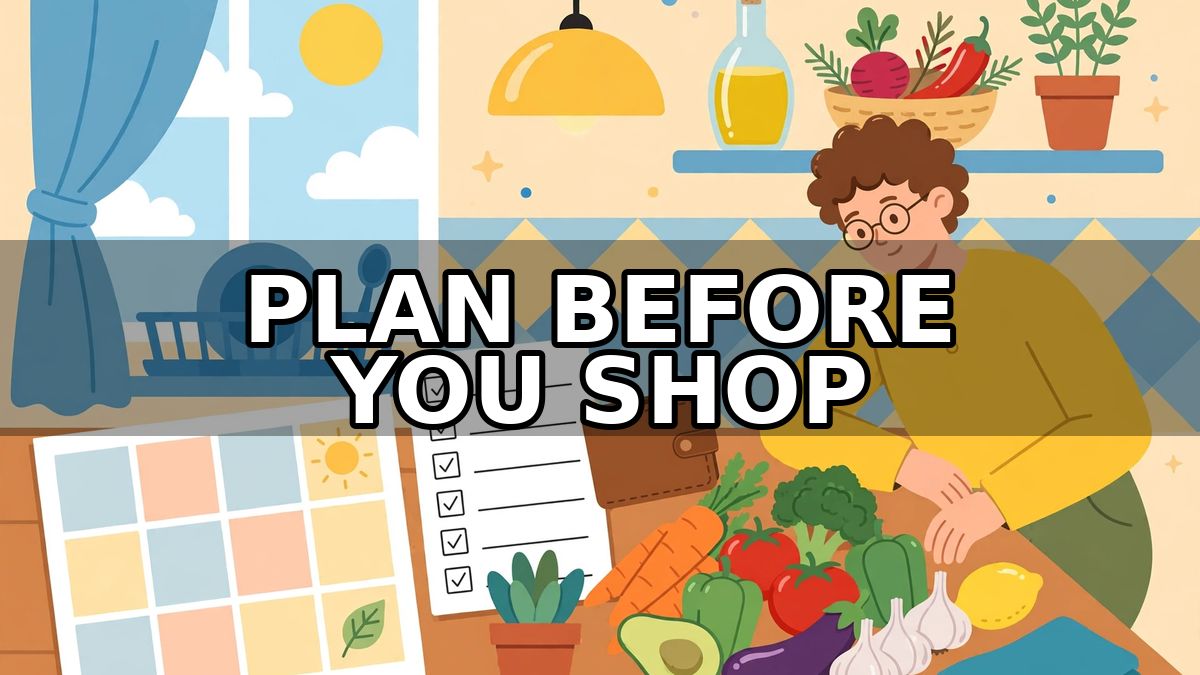
Plan Your Grocery Budget Before You Shop to Save Money on Groceries
Almost every dollar wasted at the supermarket was decided before you left the house — or rather, not decided at all. Shoppers without a plan buy duplicates of things they already own and fill the gaps with impulse buys. A 20-minute weekly routine fixes all three problems:
Step 1: Set a weekly number
Look at last month’s grocery spending — bank statements, not guesses — and divide it by four. That is your starting weekly budget. Then set a target 15–20% lower. If you spent $600 a month, your target is about $120 a week. A target you can see is a target you can hit; “spend less” is not a plan. If you have never tracked spending before, our guide to how to create a budget that actually works will get you started in under an hour.
Step 2: Check what you already have
Before writing any list, open the fridge, freezer, and pantry and note what is already there — especially anything close to expiring. Build at least two meals around those ingredients. This one habit kills the most common grocery waste: buying a second jar of something you already own while the first one goes bad at the back of the shelf.
Step 3: Plan five dinners, not seven
Plan five dinners for the week, not seven. Two nights will take care of themselves — leftovers, a simple eggs-and-toast night, or eating out. Planning all seven is how meal plans die on Wednesday; planning five is how they survive the week. Keep one of the five a “pantry dinner” built from staples you already own, like pasta, rice, beans, or soup.
Step 4: Write the list from the plan
Write your shopping list meal by meal, then cross off anything you already have. Group it by store section — produce, dairy, meat, pantry — so you walk the store once instead of criss-crossing it past temptation. A list written from a plan is the single most powerful grocery-saving tool there is, and it costs nothing.
Step 5: Eat before you shop
Never shop hungry. Hunger turns a $120 shop into a $160 shop full of snacks you did not plan to buy. Eat a proper meal or at least a filling snack before you leave, and the list suddenly becomes much easier to follow.
Step 6: Shop once a week
Every extra trip is another chance to impulse-buy. One planned weekly shop — plus a small top-up for fresh milk or bread if you genuinely need it — beats four “quick trips” that each add $20 of unplanned items. Delivery fees and tips add up the same way: a $10 delivery habit, twice a week, is $80 a month before you buy a single extra item.
Shop Smarter Inside the Store to Save Money on Groceries
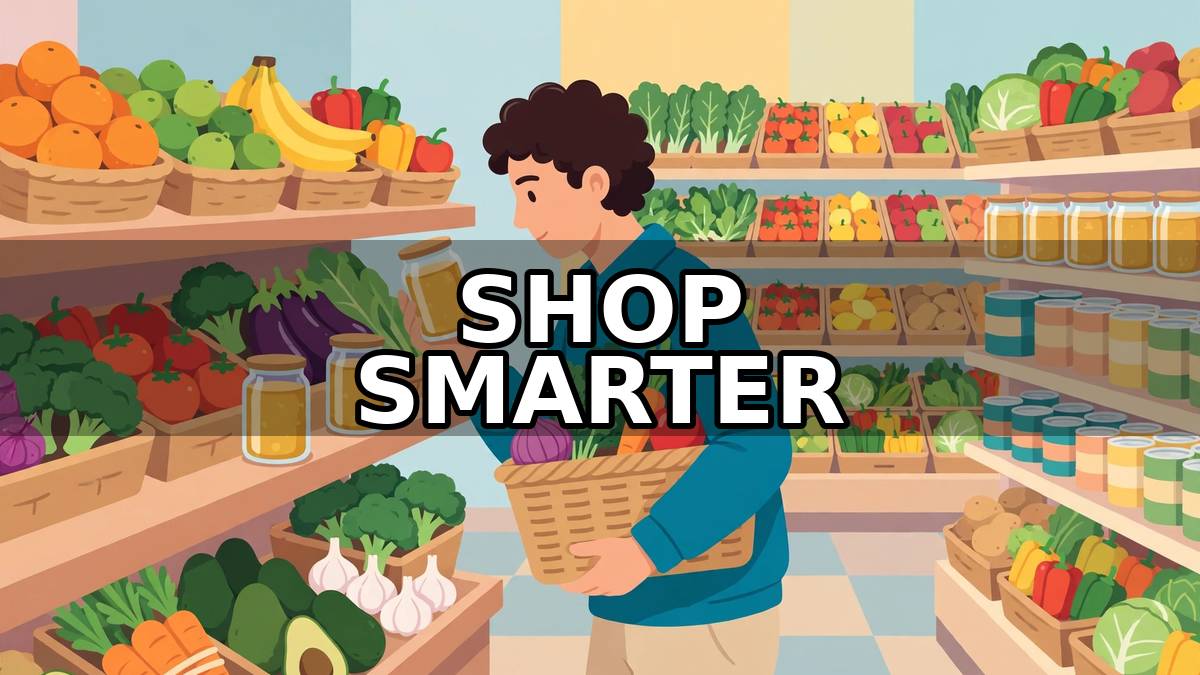
Once you are in the store, the savings come from small decisions repeated every week:
- Compare the unit price, not the sticker price. The shelf tag usually shows a price per ounce or per 100 grams. The bigger pack is often — but not always — cheaper per unit. A quick glance beats guessing, and it takes two seconds.
- Buy store brands for staples. For rice, oats, canned tomatoes, flour, and cleaning basics, the store brand is usually made in the same factories as the big names. Try one swap a week; keep the brands that genuinely taste better to you, and drop the ones where you cannot tell the difference.
- Shop the perimeter first, then the middle. Fresh produce, dairy, and meat sit around the edges of most stores; the expensive processed snacks and ready meals fill the middle aisles. Fill your cart at the edges first and you will naturally buy more real food for less money.
- Buy seasonal produce. Strawberries in winter cost double for half the flavor. Seasonal fruit and vegetables are cheaper, fresher, and last longer in the fridge — which means less of them ends up in the bin.
- Use the freezer as a savings account. Meat on sale, bread, and batch-cooked meals all freeze beautifully — and a full freezer stops the most expensive grocery habit of all: ordering takeout because there is “nothing to eat” at home.
- Skip the extras at the checkout. The checkout lane sells candy, drinks, and magazines at the exact moment your willpower is lowest. Treat it as a no-buy zone — if it was not on the list, it does not go in the cart.
Cut Waste and Make Food Last Longer
The average household throws away a surprising amount of the food it buys — and every item binned is money paid for nothing. Cutting waste is the easiest grocery saving because it requires no sacrifice at all, just better storage:
- Store produce properly. Leafy greens last twice as long in a sealed container with a paper towel; herbs keep for weeks standing in a jar of water in the fridge; onions and potatoes should never share a drawer, since onions make potatoes sprout.
- Cook once, eat twice. Double tonight’s rice, stew, or roast chicken and tomorrow’s lunch is already made. Label containers with the date and eat them within three days — leftovers eaten are money saved, leftovers forgotten are money wasted.
- Learn the difference between “use by” and “best before.” “Use by” is about safety and should be respected for meat and dairy. “Best before” is about quality — yoghurt, crackers, and canned goods are often perfectly fine past that date. Trust your eyes and nose, and stop binning good food on a date stamp.
- Keep a “use first” shelf. Put food that needs eating soon at the front of the fridge at eye level. Out of sight really is out of mind, and the back of the fridge is where good intentions go to spoil.
Mistakes That Inflate Your Grocery Bill
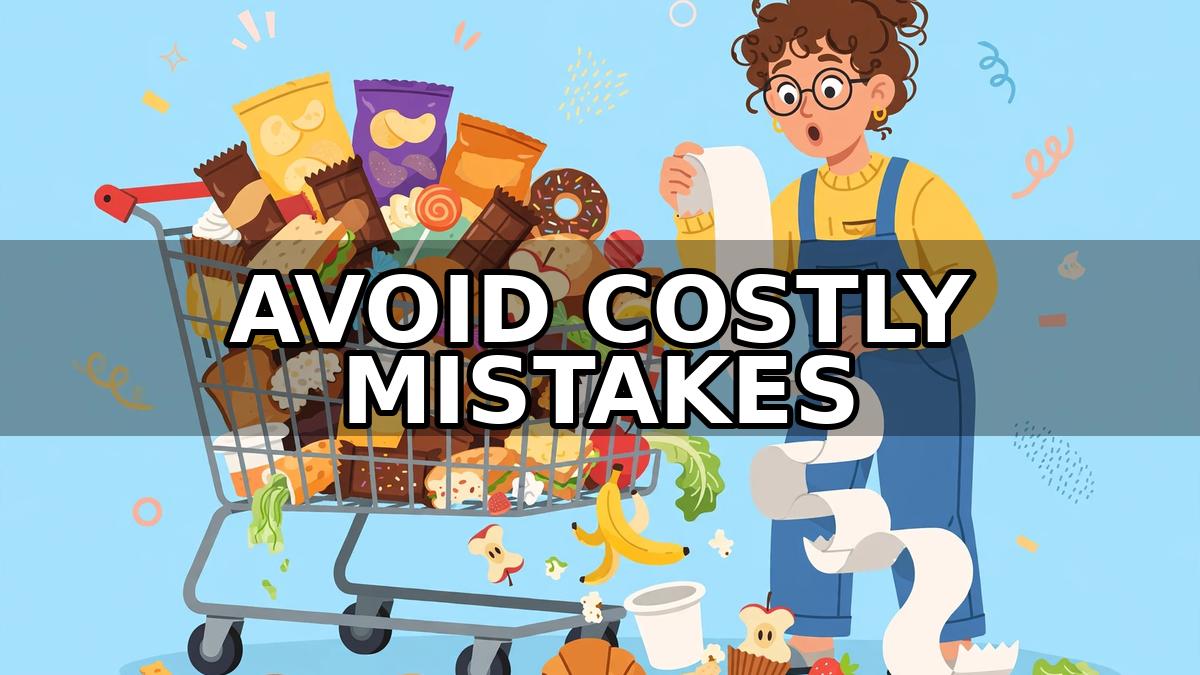
Most grocery overspending comes from a handful of repeatable mistakes:
- Shopping without a list. The list is the plan. Without it, you buy on memory and appetite, and both are unreliable in a supermarket designed to sell you more.
- Buying in bulk what you will not finish. A giant pack is only a bargain if you use it before it spoils. Bulk works for rice, pasta, and toilet paper — not for salad leaves, berries, or bread.
- Paying for convenience by default. Pre-cut vegetables, grated cheese, and single-serve packs can cost twice as much as the whole version for five minutes of saved effort. Buy convenience where it genuinely saves your week, not everywhere out of habit.
- Chasing every sale. A discount on something you were not going to buy is not a saving — it is spending. Stock up only on things you always use, and only when the price is genuinely lower per unit.
- Ignoring your own data. If your bank statement says groceries cost $700 a month and your mental estimate says $400, the statement is right. Saving starts with an honest number, not a comfortable one.
- Saving on groceries while bleeding money elsewhere. A $100 grocery saving means little if delivery apps eat $200 a month. If food spending is your weak spot, our guide to 10 simple ways to save money on a low income covers the wider picture, and our realistic $10,000 savings plan shows how small monthly wins add up.
Grocery Saving Q&A
How much can I realistically save on groceries?
Most households can cut 15–25% in the first month with a list, a weekly budget, and less waste — often $75–$150 a month. The biggest wins come in the first few weeks, then settle into steady savings as the habits stick.
Is meal planning worth it if I live alone?
Yes, even more so — single households waste proportionally more food, because recipes serve four and fresh produce spoils fast. Cook full recipes, freeze half immediately, and plan meals that share ingredients across the week.
Are coupons and cashback apps worth the effort?
They help if they fit your routine, but they are the garnish, not the meal. A shopping list and a weekly budget will save you ten times more than couponing. Never buy something just because there is a coupon for it.
Should I switch to a cheaper supermarket?
Try it for a month and compare like-for-like totals, not vibes. Discount stores are often cheaper for staples but weaker on fresh produce; some shoppers save most by splitting the shop. The USDA’s MyPlate site (https://www.myplate.gov/) is a free, authoritative place to plan balanced meals on any budget.
Keep Reading
- How to Create a Budget That Actually Works (The 50/30/20 Rule Explained)
- 10 Simple Ways to Save Money on a Low Income
- How to Save $10,000 in a Year: A Realistic Plan for Beginners (2026 Guide)
- Emergency Fund: How Much Do You Really Need in 2026?
This article is for educational purposes only and is not financial advice. Prices, store policies, and product availability vary by location and change over time — do your own research and consider speaking with a qualified professional before making financial decisions.