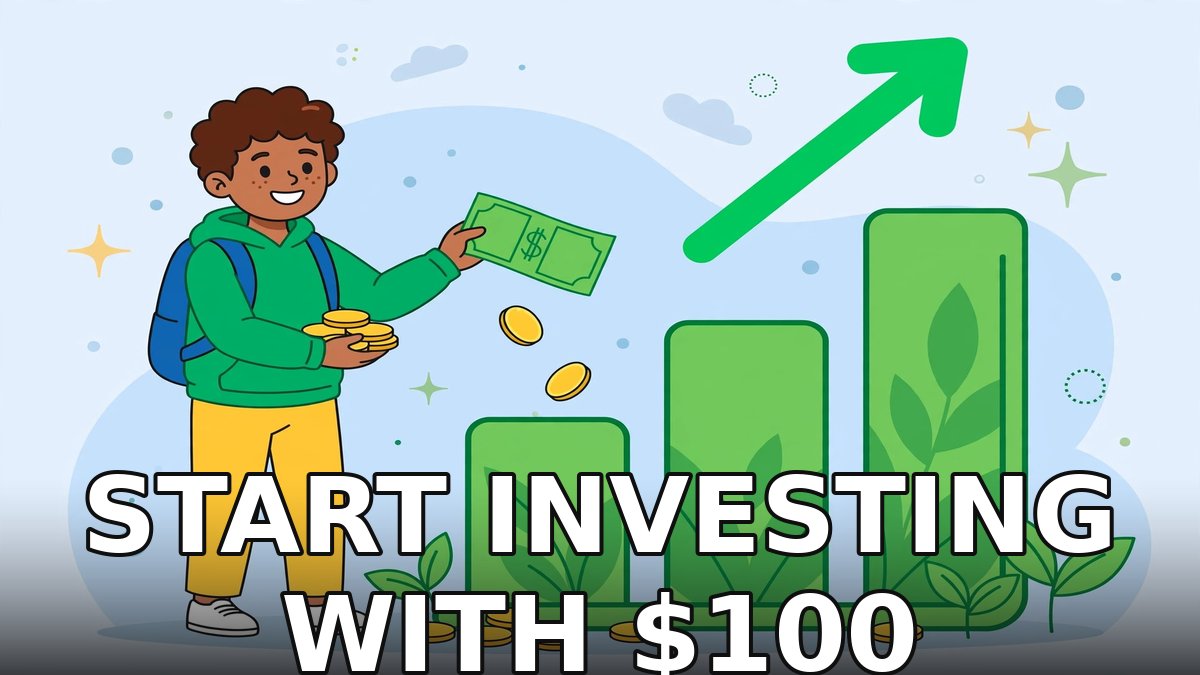
If you want to start investing with $100, here is the good news: that is enough. Not “enough to get rich this year” — but absolutely enough to become a real investor today. Fractional shares and zero-commission brokerages mean your $100 can buy tiny pieces of the world’s biggest companies right now, for free. This beginner’s guide walks you through exactly where to open an account, what to buy with your first $100, a simple 5-step plan, and the mistakes that trip up every new small investor.
Why $100 Is Enough to Start Investing in 2026
Twenty years ago, trying to start investing with $100 was nearly impossible. Brokers charged $10 per trade (that is 10% of your $100 gone instantly), and most required minimum deposits of $1,000 or more. Three changes removed those walls:
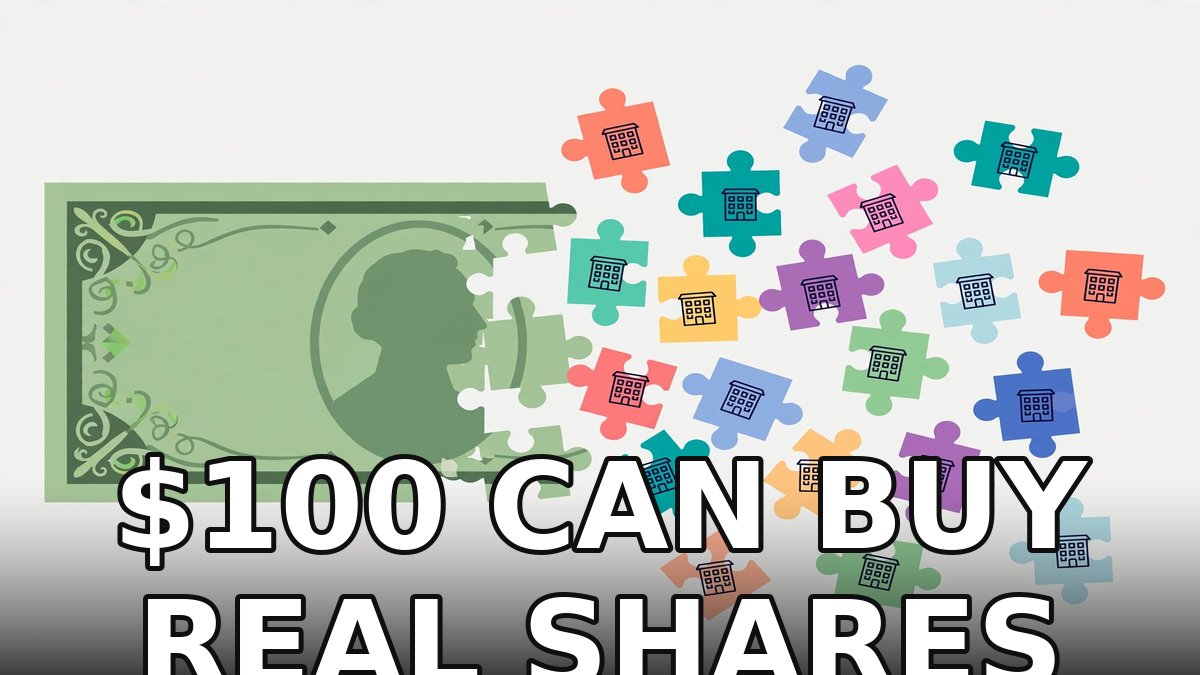
- Fractional shares. You no longer need $600 to own a piece of a $600 stock. Today you can buy $10 or even $1 worth of almost any company. Your $100 can be split across several stocks if you want.
- Zero commissions. Most major brokerages now charge $0 per stock or ETF trade. Every dollar of your $100 goes into the market instead of into fees.
- No minimums. The big beginner-friendly brokers let you open an account with $0 and fund it with whatever you have.
The honest catch: $100 will not make you rich. A great 10% year turns $100 into $110. The real power when you start investing with $100 is what it builds — the habit, the knowledge, and the account that your future $100s and $1,000s will flow into. Building an emergency fund first is still smart — invest money you will not need for several years, and let your budget create a steady stream of future contributions with the 50/30/20 rule.
Where to Open an Investing Account With $100
You need a brokerage account — the account type that lets you buy stocks and funds. For beginners in the US who want to start investing with $100, the well-known choices (Fidelity, Schwab, Vanguard, and app-based brokers like Robinhood) all offer zero-commission trades, fractional shares, and no account minimums. Pick one that is established, insured, and easy to use on your phone; the “best” broker matters far less than actually starting.
Two account flavors to know:
- Taxable brokerage account — flexible, withdraw anytime, simplest way to begin.
- Roth IRA — a retirement account with big tax advantages for money you will not touch until age 59½. If you are in the US and eligible, it is worth opening one alongside (or instead of) a taxable account for long-term money.
(Outside the US, look for your country’s equivalent — the UK has Stocks & Shares ISAs, for example. The strategy in this guide works anywhere: low-cost, diversified, automatic.)
If your employer offers a 401(k) match, take the match first — it is an instant 100% return. Then invest your own $100 the way this guide describes.
What to Buy With Your First $100
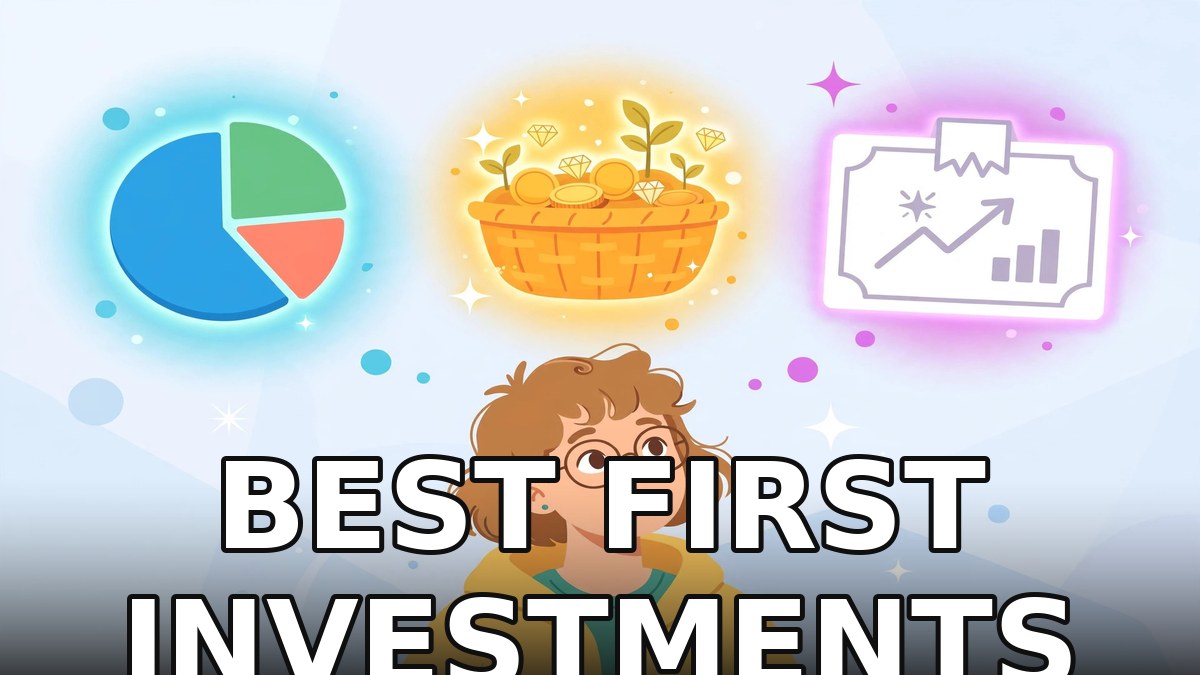
Keep it boring on purpose when you start investing with $100. Your first $100 has one job: teach you how markets behave while your money works in something diversified and low-cost.
Option 1: A broad-market index ETF (the best default).
One purchase buys you a tiny slice of hundreds of companies at once — instant diversification. A total US market or S&P 500 index ETF costs a fraction of a percent per year in fees. If you only learn one move, learn this one.
Option 2: A few fractional shares of individual companies.
Buy $25 each of four companies you actually understand — the ones whose products you use. This teaches you how single stocks move, but never put your whole $100 in one stock.
Option 3: Split it.
$70 in an index ETF for the core, $30 in fractional shares to scratch the stock-picking itch. You learn both lessons with one $100.
What to skip for now: crypto speculation, penny stocks, options, and anything promising “10x in a month.” Those are lotteries, not investments — and lotteries are how beginners turn $100 into $0.
If you want a structured way to grow your investable income first, our guide to legit side hustles with no money can help you fund your next deposits.
Your 5-Step Plan to Start Investing With $100
- Open an account at a zero-commission broker. Choose one established broker, open a taxable brokerage account (and consider a Roth IRA if you are eligible). It takes about 15 minutes online.
- Link your bank and deposit $100. Start with money you will not need for at least 3–5 years. Short-term money belongs in savings, not the market.
- Buy a broad-market index ETF with the full $100. Search the ETF, enter $100, and buy — fractional shares handle the rest. Congratulations, you are an investor.
- Turn on automatic investing. Set a recurring transfer — even $25 a month. Automation beats willpower; this single setting matters more than which ETF you picked.
- Leave it alone and check quarterly. Do not watch prices daily. Markets wobble constantly and grow over years. Your job now is adding money and waiting.
How Your $100 Can Grow Over Time
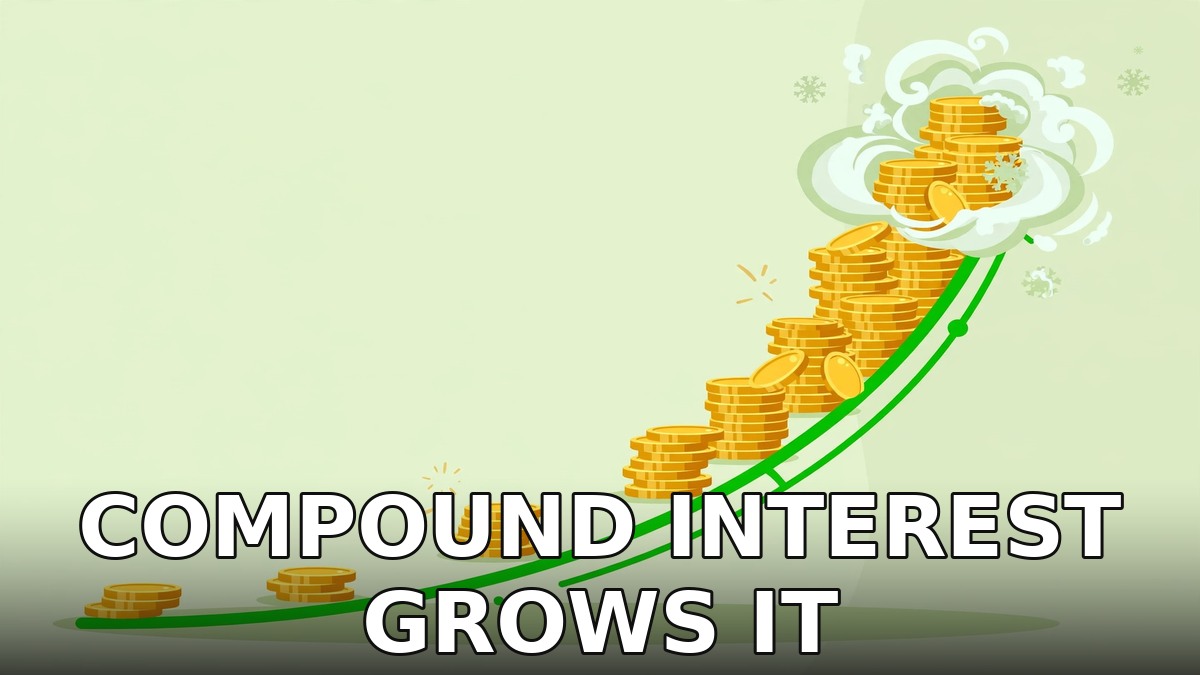
This is where small starts get exciting — compound interest means your gains earn their own gains. A single $100 invested at a 7% average annual return becomes about $760 after 30 years without you adding another cent. The SEC’s investor education site explains the mechanics clearly — see investor.gov’s introduction to investing for a deeper walkthrough.
But the real magic is your $100 becoming a habit:
- $100/month at 7% average for 10 years → roughly $17,000 total (you put in $12,000)
- $100/month at 7% average for 20 years → roughly $50,000 total (you put in $24,000)
- $100/month at 7% average for 30 years → roughly $122,000 total (you put in $36,000)
Notice the pattern: the longer you stay invested, the more the growth outruns your contributions. That is why starting today with $100 beats starting in five years with $1,000 — time in the market is the one input you can never buy back. The bottom line: when you start investing with $100 early and keep adding automatically, time does most of the heavy lifting for you.
Mistakes to Avoid When You Start Small
The fastest way to succeed when you start investing with $100 is to avoid the classic beginner traps:
- Waiting until you have “enough.” The perfect amount never arrives. $100 invested today teaches you more than $1,000 invested “someday.”
- Day trading your $100. Turning a small account into quick profit is the fastest way to learn an expensive lesson. Buy, hold, repeat.
- Chasing penny stocks and meme coins. Anything priced at fractions of a cent with “moon” in its marketing exists to separate beginners from their money.
- Ignoring fees. A 1% annual fee sounds tiny — over 30 years it can eat roughly a quarter of your returns. Favor funds charging under 0.10% per year.
- Selling when the market dips. A 10% drop on $100 is $10 — uncomfortable, not catastrophic. Selling locks in the loss; holding has historically recovered.
- Putting it all in one stock. One company can go to zero. Hundreds of companies in an index fund effectively cannot.
- Investing money you need soon. Rent money, emergency money, and next-semester tuition belong in a high-yield savings account, not in stocks.
Start Investing With $100: Quick Q&A
Can I really invest with just $100?
Yes. Fractional shares and zero-commission brokers mean $100 buys real ownership in real companies today, with no minimums and no per-trade fees.
Is $100 enough to make real money?
On its own, no — $100 is a beginning, not a portfolio. Its real value is starting the habit: $100 a month over decades is what builds serious wealth.
What is the best thing to invest $100 in as a beginner?
A broad-market index ETF. It is diversified, low-cost, and requires zero stock-picking skill — the single best default for a first $100.
Should I invest my $100 or save it first?
If you have no emergency savings, save first — build a small emergency fund before investing. Invest money you will not need for at least 3–5 years.
How risky is investing $100?
The dollar risk is tiny ($100), but the behavior risk is real: panic-selling and speculation are how small accounts die. A diversified index fund held for years is the low-drama path.
Keep Reading
- Emergency Fund: How Much Do You Really Need in 2026?
- How to Create a Budget That Actually Works (The 50/30/20 Rule Explained)
- 15 Legit Side Hustles With No Money (2026 Guide)
- 10 Simple Ways to Save Money on a Low Income
This article is for educational purposes only and is not financial advice. Do your own research and consider speaking with a qualified professional before making financial decisions.