
Every beginner investor eventually hits the same fork in the road: index funds vs individual stocks. One path promises simplicity and steady growth; the other promises excitement and the chance of bigger wins. Ask ten people and you will hear ten strong opinions — most of them loud, most of them based on whatever worked for that person.
This 2026 guide cuts through the noise with the facts that actually matter: how index funds vs individual stocks compare on returns, risk, cost, and the time they demand from you — plus a simple framework for choosing the path that fits your life.
What Are Index Funds?
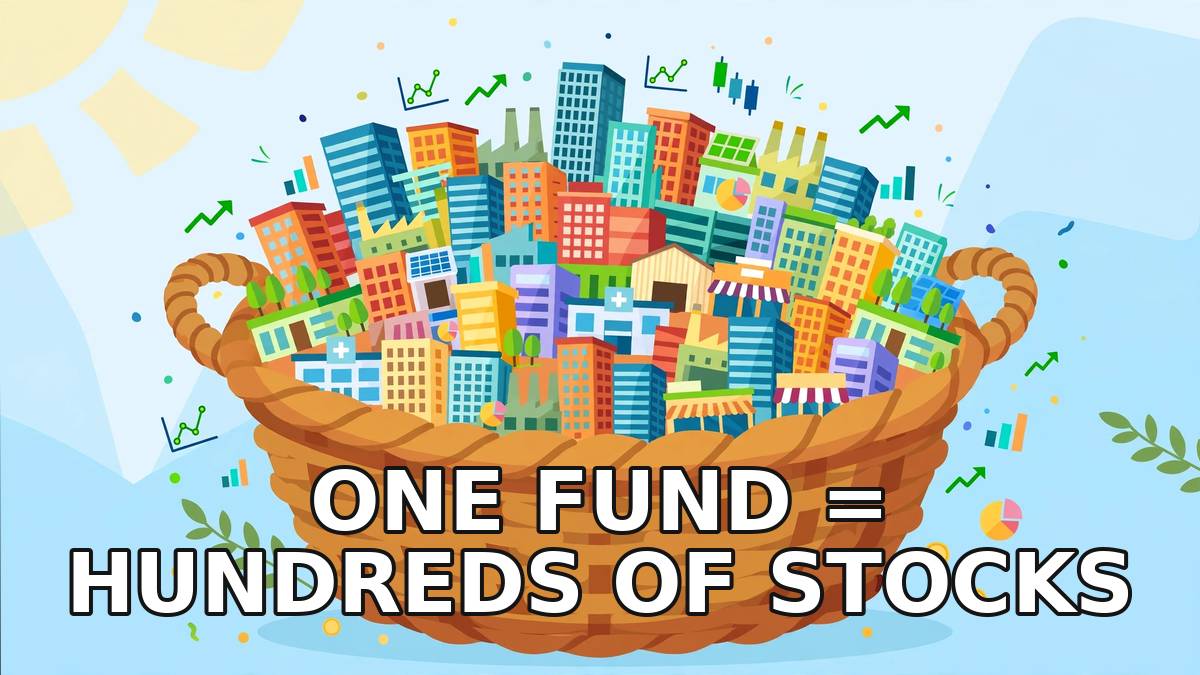
An index fund is a single investment that holds hundreds (sometimes thousands) of stocks at once. Instead of betting on one company, you buy a tiny slice of an entire market. The most famous example is an S&P 500 index fund, which tracks 500 of the largest US companies — Apple, Microsoft, NVIDIA, and hundreds more — in one purchase.
Index funds are “passive,” which means nobody is picking winners. The fund simply mirrors its index. That simplicity is the whole point: you get instant diversification, rock-bottom fees (often under 0.10% per year), and returns that roughly match the market as a whole. Over the long run, the broad US market has averaged around 10% per year before inflation — and owning an index fund is the simplest way to capture that. Understanding what an index fund is makes the index funds vs individual stocks choice much clearer.
What Does Buying Individual Stocks Mean?
Buying individual stocks means purchasing shares of specific companies — you decide that, say, Tesla or Coca-Cola is a good bet, and you put your money behind that judgment. This is “active” investing: the outcome depends entirely on your research, timing, and emotional discipline.
Individual stocks carry unlimited upside. Pick the next big winner early and a few thousand dollars can turn into tens of thousands. They also carry unlimited downside — a single company can drop 50% in a year, or go bankrupt and take your money with it. Your portfolio’s fate rests on a handful of decisions you make yourself, which makes it both thrilling and unforgiving.
Index Funds vs Individual Stocks: The Honest Comparison
Here is how index funds vs individual stocks really compare across the factors that matter most:
- Returns: the average individual investor earns far less than the market due to bad timing and overtrading; studies show retail investors underperform simple buy-and-hold index strategies by several percentage points per year.
- Beating the market: stock picking CAN beat the market — but the odds are against you, and even most professional fund managers fail over long periods.
- Risk: index funds spread money across hundreds of companies, so one bad quarter barely dents you; single stocks concentrate risk.
- Cost: index ETFs charge ~0.03-0.10% per year; stock trading has hidden costs (bid-ask spreads, taxes from frequent trading, research tools).
- Time and effort: index funds need ~30 minutes a year; individual stocks need hours every week.
- Emotional difficulty: holding one fund through a dip is hard; holding a single stock down 30% is agonizing — panic-selling locks in losses.
| Factor | Index Funds | Individual Stocks |
|---|---|---|
| Typical long-term returns | Match the market (~10%/yr before inflation) | Often trail the market for most investors |
| Risk | Low (hundreds of companies) | High (concentrated bets) |
| Annual costs | ~0.03–0.10% | Hidden costs from trading and taxes |
| Time needed | ~30 minutes a year | Hours per week |
| Skill required | None | Research + emotional discipline |
Which Should a Beginner Choose?
For roughly 9 out of 10 beginners, index funds are the right answer — and it is not close. The index funds vs individual stocks debate ultimately comes down to temperament and time, not intelligence.
Choose index funds if: you want to build wealth with minimal time; you are investing money you will not need for years; you would rather not think about the market daily; or you are just starting out. Consider individual stocks if: you genuinely enjoy researching companies; you can invest money you could afford to lose; and you commit to keeping individual stocks under 10% of your total portfolio.
The smartest beginner move is the hybrid: put 90% (or 100%) in index funds and let the stock-picking itch live in a small side allocation.
If you have not started yet, our guide to how to start investing with $100 walks through your first purchase step by step. Check how much you really need in 2026 — investing money you might need next month is a mistake no index fund can fix.
How to Start With Either Path
- Open a brokerage account. Pick an established, zero-commission broker.
- Fund it with money you will not need for 5+ years. If you are still building your safety net, our 10 simple ways to save money on a low income can free up your first investment dollars.
- Index path: buy a broad-market index ETF. Search for a total market or S&P 500 ETF, enter your amount, and buy. Set up automatic monthly contributions.
- Stock path: cap it at 10% of your portfolio. Buy shares only in companies you genuinely understand. Never buy based on social media hype.
- Hold, add money, and check quarterly — not daily. In the index funds vs individual stocks journey, both paths reward patience and punish panic.

Index Funds vs Individual Stocks: Quick Q&A
Can beginners make money picking individual stocks? Some do, but most do not — the average stock picker underperforms a simple index fund due to bad timing and overtrading.
Are index funds safe? No investment is risk-free; index funds fall when markets fall, but they are far safer than any single stock. The SEC’s investor education site has a solid walkthrough of the basics — see investor.gov’s introduction to investing.
How many individual stocks should a beginner own? Keep them at 0–10% of your portfolio; if you buy, five to ten companies across different industries is the minimum.
What is better for retirement — index funds or stocks? Index funds win decisively for almost everyone.
Should I sell my individual stocks and switch to index funds? If stock picking is stressing you out or underperforming — yes, switching is one of the smartest moves a beginner can make.
Keep Reading
- How to Start Investing With $100 (Beginner’s Guide)
- Emergency Fund: How Much Do You Really Need in 2026?
- How to Create a Budget That Actually Works (The 50/30/20 Rule Explained)
- 10 Simple Ways to Save Money on a Low Income
This article is for educational purposes only and is not financial advice. Do your own research and consider speaking with a qualified professional before making financial decisions.