
You can make money on YouTube without showing your face — and thousands of channels already do. Some of the most profitable channels on the platform never show the creator at all: the audience hears a voice, watches animations or screen recordings, and never sees a human. If camera shyness, privacy, or a day job is holding you back from starting, faceless videos remove that barrier completely.
This is not a loophole. YouTube’s rules allow faceless content, and advertisers pay the same rates for it. What matters is the same thing that matters for every channel: videos people actually watch. This guide to making money on YouTube without showing your face walks you through the niches that pay best, the gear and tools you need, monetization options, and a 7-step plan to launch your first faceless channel in 2026.
Can You Really Make Money on YouTube Without Showing Your Face?
Yes — if the content is original and valuable. YouTube’s monetization rules reward watch time and audience retention, not faces. A faceless channel qualifies for the YouTube Partner Program with the same thresholds as any channel — 1,000 subscribers and 4,000 watch hours in 12 months (or 10 million Shorts views in 90 days) — so you can make money on YouTube without showing your face on equal terms.
The one rule to respect: YouTube does not monetize repetitive or re-uploaded content. Grabbing other people’s clips, reposting movie scenes, or mass-generating low-effort AI slideshows will get rejected at review or removed later. A real faceless channel means original commentary, original recordings, original animations — content where your effort is visible even if your face is not.
Realistic expectations help. Most faceless channels earn nothing for the first 2–3 months, then grow. A channel in a decent niche can reach $200–$1,000/month within a year of consistent uploads. Top faceless channels earn five figures monthly, but they treated it like a business: scheduled uploads, good thumbnails, and constant improvement.
Best Faceless YouTube Niches That Make Money in 2026
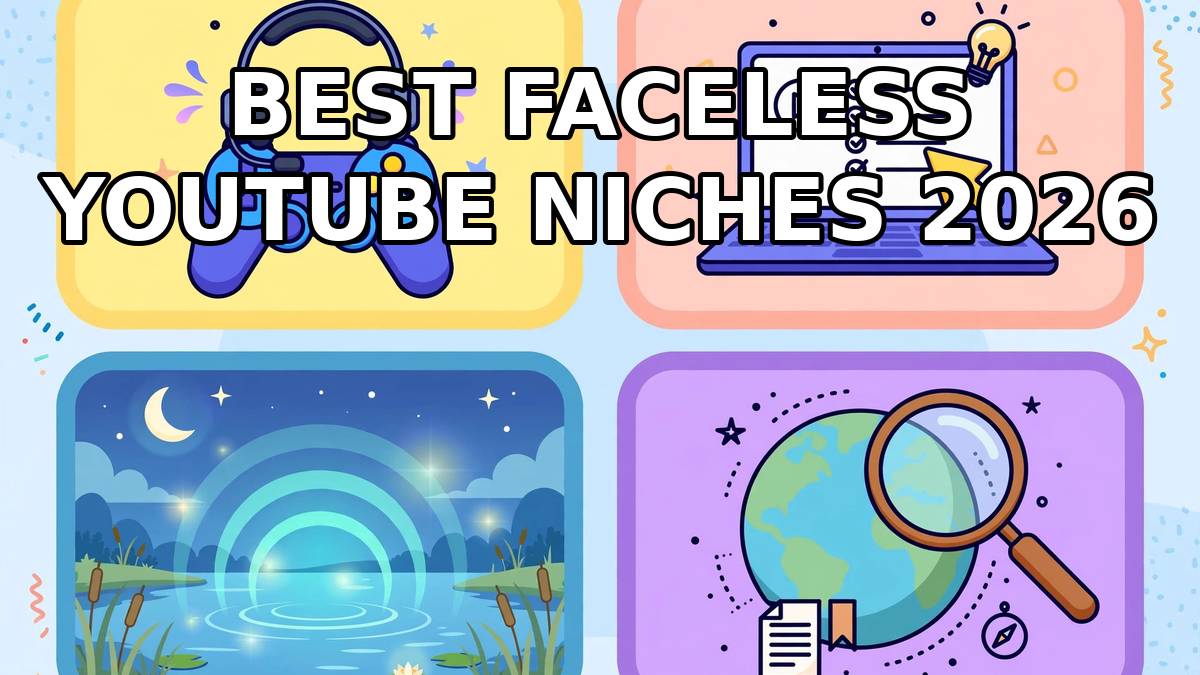
Not all faceless niches pay equally. Advertisers pay more (higher CPM) in finance, software, and business than in entertainment. Pick a niche that combines advertiser demand with content you can produce weekly — that is the foundation if you want to make money on YouTube without showing your face.
Screen-recording tutorials. Software walkthroughs, spreadsheet tricks, coding lessons, and app reviews. High CPM, evergreen searches, and you already own the “camera” — your screen. This is the easiest faceless format to start making money on YouTube without showing your face.
Finance and business explainers. Animated breakdowns of money topics, market news explained simply, and side-hustle breakdowns. Finance has some of YouTube’s highest ad rates, and pairing this with a blog — see how to start a blog and make money — doubles your income streams from the same research.
Gaming and esports. Commentary over gameplay, game guides, and funny moments compilations. Huge audience, lower CPM, but volume makes up for it. A decent microphone matters more than editing skills here.
Relaxing and ambient videos. Rain sounds, fireplace loops, study music, nature footage. Very low production effort once the workflow is set, and these videos run for hours, stacking watch time fast. Monetization is real but CPM is on the lower end.
AI-assisted documentaries and stories. True crime, history, geography, and mystery channels with voiceover plus stock footage or animations. These get massive watch time, but YouTube’s review team is strict about originality — your script must be genuinely written by you, not copy-pasted.
Product reviews and tech unboxings. Hands-only videos reviewing gadgets, tools, and gear. These convert well with affiliate marketing for beginners, because viewers are already in buying mode.
Avoid niches built purely on re-uploaded content — sports highlights, movie clips, celebrity compilations. They grow fast and die at monetization review.
How to Make Money on YouTube Without Showing Your Face: 7 Steps
Step 1: Pick one niche and study 10 channels in it
Watch the top faceless channels in your niche and study how they make money on YouTube without showing your face. Note their video length, thumbnail style, upload frequency, and what the comments praise. You are looking for a repeatable format — “one format, done weekly” beats “ten formats, done randomly.”
Step 2: Get a microphone — it matters more than a camera
Faceless video lives or dies on audio — and quality audio is essential to make money on YouTube without showing your face. A $30–$70 USB microphone in a quiet room beats a $500 camera you never turn on. Record a 30-second test, listen on headphones, and fix echo with blankets or curtains before you record anything real.
Step 3: Set up your recording and editing workflow
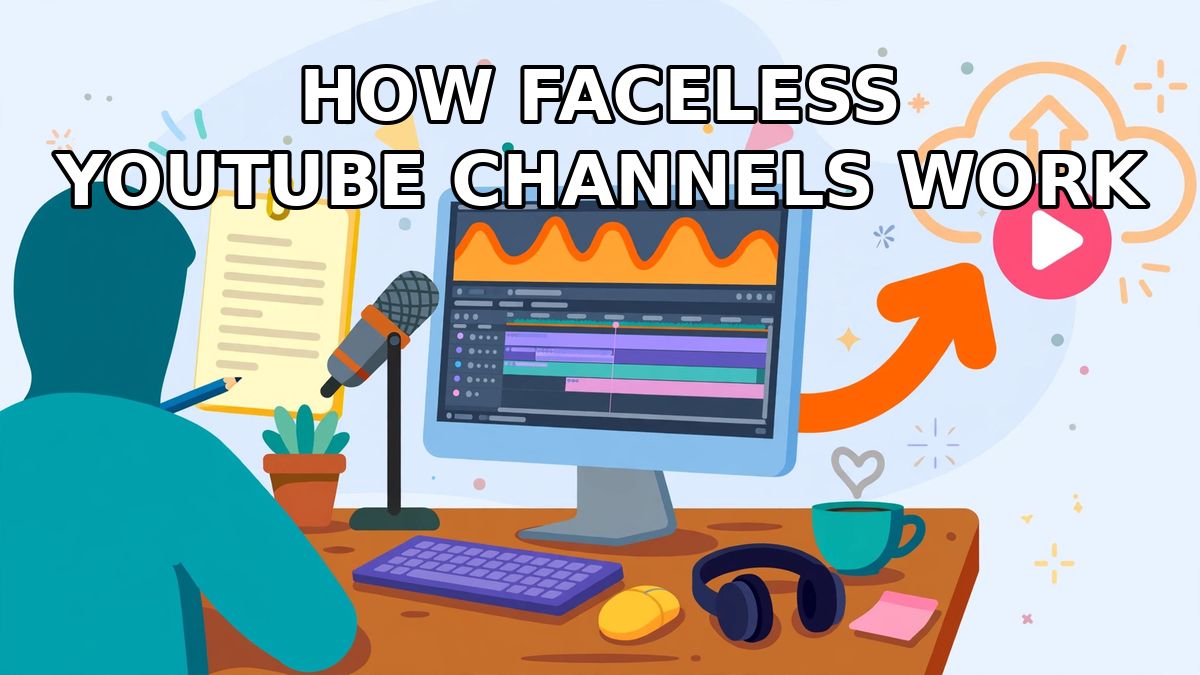
For screen recordings, free tools like OBS Studio do the job. For animations and slideshows, Canva or CapCut are beginner-friendly. For voiceovers, Audacity (free) cleans up noise in minutes. Keep your workflow simple: script → record → edit → thumbnail → upload. If making one video takes a week, the workflow is too complex.
Step 4: Write scripts before you record anything
Every good faceless video starts as a script, and scripting is non-negotiable if you want to make money on YouTube without showing your face. Write how you talk, not how you write essays. Aim for a hook in the first 15 seconds (“Here is the mistake costing you…”), one clear promise per video, and an ending that teases the next video. Scripting 10 videos ahead means you never stare at a blank page.
Step 5: Design thumbnails that work without your face
Faceless does not mean faceless-looking. Use bold text (3–4 words), one strong image, and high contrast. Study which thumbnails in your niche get clicked and copy the pattern, not the design. Thumbnails decide 50%+ of your views — to make money on YouTube without showing your face, spend real time on them.
Step 6: Publish consistently for 90 days
Upload on a schedule you can actually keep — one or two videos per week is enough. The first 20–30 videos are your training data: watch the retention graphs, see where viewers leave, and fix that spot in the next video. Most channels that quit do so at video 8, right before the algorithm has enough data to recommend them. Keep publishing if you want to make money on YouTube without showing your face.
Step 7: Apply for monetization, then diversify income
Once you hit 1,000 subscribers and 4,000 watch hours, apply to the YouTube Partner Program. But do not stop at ad revenue — add affiliate links in descriptions (electronics, software, and courses pay well), sell a digital product to your audience, or offer sponsorships once you pass 10,000 subscribers. If you are also building other income streams, these legit side hustles with no money keep cash flowing while the channel grows.
A realistic timeline: months 1–3, setup plus 20–30 videos and almost no income; months 4–6, first monetization approval and $50–$300/month; months 7–12, $300–$2,000/month if you kept publishing. Channels that upload weekly for a full year almost always look completely different from their first video — and that is when you truly make money on YouTube without showing your face.
How Faceless Channels Actually Earn Money
Ad revenue is only one stream if you want to make money on YouTube without showing your face. Here is the full picture:
- YouTube ads (AdSense). $2–$15 per 1,000 views depending on niche and audience country. Finance and software sit at the top; entertainment at the bottom.
- Affiliate links. Review and tutorial channels earn more from affiliate commissions than from ads. One well-placed link under a popular video can pay monthly for years.
- Sponsorships. Brands pay faceless channels too — what they buy is your audience, not your face. Rates start around $20–$50 per 1,000 subscribers per video.
- Digital products. Ebooks, templates, presets, and courses. A channel teaching a skill can sell a $20–$50 product to a small fraction of viewers and beat ad income.
- YouTube Shorts bonuses and channel memberships. Smaller streams, but Shorts grow subscribers fast, and memberships add recurring income once you have loyal fans.
A Worked Example: One Realistic Month for a Small Faceless Channel
Abstract ranges are hard to plan around, so here is one concrete month, with ordinary numbers. Imagine a screen-recording tutorial channel — software tips for beginners — in its seventh month. It has 30 videos live, publishes one video a week, and passed monetization in month four.
In month seven the channel gets 34,000 views. At an RPM of $8 — comfortably inside the $2–$15 range for this kind of content — ad revenue comes to 34,000 × $8 ÷ 1,000 = $272 for the month.
Ads are not the whole story. Two of the channel’s tutorial videos recommend a screen-recording tool through an affiliate link in the description. That month, 41 viewers buy through the link, and the channel earns an average commission of $9 per sale: 41 × $9 = $369.
Added together, the month pays $272 + $369 = $641 — from a channel with under 3,000 subscribers, no face on camera, and one upload a week. Notice the split: the affiliate income is bigger than the ad income, which is exactly why the channels that last treat ads as the bonus, not the business.
The table below shows how a channel like this typically gets there — slowly, then noticeably.
| Month | Videos live | Views that month | Subscribers (end of month) | Ad revenue |
|---|---|---|---|---|
| 1 | 4 | 600 | 38 | $0 |
| 2 | 8 | 1,900 | 140 | $0 |
| 3 | 13 | 5,200 | 415 | $0 |
| 4 | 17 | 11,000 | 1,060 | $40 |
| 5 | 21 | 19,000 | 1,780 | $152 |
| 6 | 25 | 27,500 | 2,940 | $220 |
Months 1–3 are pre-monetization: the channel is building toward 1,000 subscribers and 4,000 watch hours. Monetization is approved partway through month 4, so only about 5,000 of that month’s views are monetized at an $8 RPM. From month 5 on, all views are monetized at the same $8 RPM.
Faceless YouTube Mistakes to Avoid
Here are the pitfalls to avoid when you make money on YouTube without showing your face:
- Re-uploading other people’s content. Clips from movies, TV, or other creators will fail monetization review and can earn copyright strikes. Original content only.
- Publishing without a niche. Random topics mean the algorithm never learns who to recommend you to. One niche, one audience, one format.
- Bad audio. Viewers forgive 720p video. They do not forgive echo, hiss, or mumbling. Fix audio before upgrading anything else.
- Skipping thumbnails and titles. “Video 12” gets no clicks. Spend 30 minutes per thumbnail and write titles that promise a specific benefit.
- Quitting at video 10. The channels that win are the ones still uploading at video 50. Treat the first 30 videos as paid training.
- Ignoring analytics. YouTube Studio tells you exactly where viewers leave. Watch the retention graph for every video and fix the drop-off point next time.
- Buying subscribers or views. Fake engagement destroys your analytics, violates YouTube’s terms, and guarantees the channel never gets recommended to real people.
More mistakes worth avoiding:
- Choosing a niche purely for its high CPM. If you cannot imagine making 50 videos on the topic, the ad rate is irrelevant — you will quit long before the money arrives.
- Using trending songs as background music. A copyright claim hands your video’s revenue to the music owner, and repeated claims can end a channel. Use YouTube’s free Audio Library or licensed tracks instead.
- Relying on Shorts to hit the 4,000 watch-hour target. Watch time from the Shorts feed does not count toward that threshold — Shorts have their own separate route (10 million views in 90 days). A watch-hours plan needs long-form videos.
- Spending on gear and courses before any revenue. Every dollar spent before the first payout raises the pressure and shortens your runway. Earn first, upgrade second.
Faceless YouTube: Quick Q&A
Can you monetize a faceless YouTube channel?
Yes. You can make money on YouTube without showing your face through the YouTube Partner Program under the same rules: 1,000 subscribers plus 4,000 watch hours (or 10M Shorts views). The content must be original — re-uploaded clips get rejected.
How much do faceless YouTube channels make?
Small monetized channels make $50–$500/month from ads. In good niches, established channels earn $1,000–$10,000+/month combining ads, affiliates, and sponsorships — that is the real payoff when you make money on YouTube without showing your face.
Do I need expensive equipment to start?
No. A USB microphone ($30–$70), a computer, and free software (OBS, CapCut, Audacity) are enough to make money on YouTube without showing your face. Upgrade only when revenue justifies it.
What is the easiest faceless niche for beginners?
Screen-recording tutorials in a skill you already have — the simplest way to make money on YouTube without showing your face. You need no camera, no animation skills, and searches bring steady traffic for years.
Can I use AI voices for my videos?
You can, but be careful. Robotic narration hurts retention, and YouTube rejects channels that feel mass-produced. Your own voice — even an imperfect one — builds more trust and survives review more reliably, which matters when you make money on YouTube without showing your face.
How long until a faceless channel makes money?
With weekly uploads, you can make money on YouTube without showing your face and reach monetization in 4–8 months. The first year is building; the compounding starts after.
How many hours a week does one faceless video take?
For a beginner, roughly 5–7 hours per video: 1–2 hours scripting, about an hour recording (including re-takes), 2–3 hours editing, and 30–45 minutes on the title and thumbnail. That is why one video a week is the realistic starting pace alongside a job — and why batching scripts two or three at a time saves so much time.
Can I start a faceless channel with just my phone?
Yes, for several formats. Phones record clean voiceovers for narration and stories, and free apps handle basic editing and captions. The one upgrade that matters is still audio: record in a quiet, soft-furnished room, keep the phone close to your mouth, and your phone setup will sound better than an expensive microphone in an echoing kitchen.
Keep Reading
- How to Start a Blog and Make Money (2026 Guide)
- Affiliate Marketing for Beginners: How It Actually Works (2026 Guide)
- 15 Legit Side Hustles With No Money (2026 Guide)
- How to Make Money on Fiverr as a Beginner in 2026
This article is for educational purposes only and is not financial advice. Do your own research and consider speaking with a qualified professional before making financial decisions.