

If you have ever been turned down for a card, quoted a high interest rate on a loan, or asked for a bigger deposit on an apartment, the reason probably came down to one three-digit number: your credit score. Yet most people have never been taught what is a credit score, how it is calculated, or what they can do to change it. This guide explains it all in plain English — the ranges lenders use, the five factors behind your score, and seven practical steps to improve it in 2026.
What Is a Credit Score? Credit Score Ranges Explained
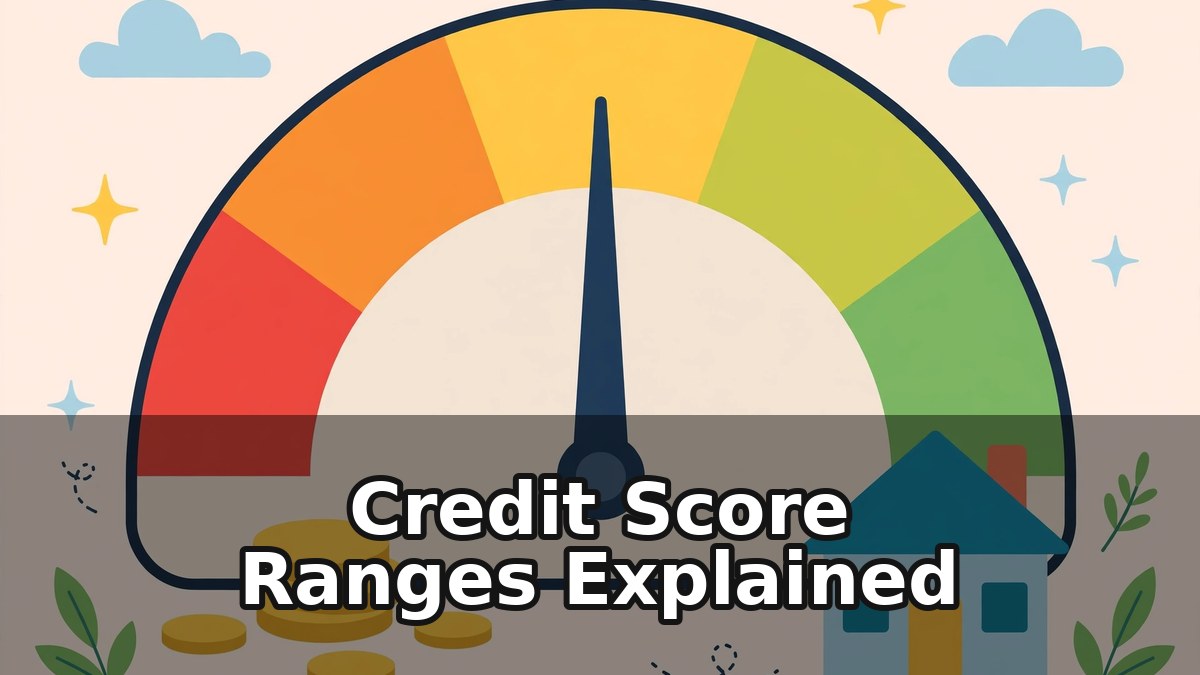
What is a credit score? It is a number, usually between 300 and 850, that predicts how likely you are to repay borrowed money on time. Lenders use it as a shortcut: instead of reading your entire financial life, they look at the score and decide how risky you are to lend to. The most widely used scoring model in the US is FICO, and its ranges work like this:
| Range | Rating | What it means for you |
|---|---|---|
| 800–850 | Exceptional | Best rates, easiest approvals |
| 740–799 | Very Good | Strong rates, most approvals |
| 670–739 | Good | Most lenders will approve you |
| 580–669 | Fair | Approvals possible, rates higher |
| 300–579 | Poor | Hard to get approved, high rates |
A score of 670 or above is generally considered good, and 740 or above unlocks the best deals. But your score is not a grade on your worth as a person — it is a snapshot of your borrowing history, and it changes every month as new information arrives. Two people with the same income can have wildly different scores, and a low score today says nothing permanent about your future.
One common confusion: your credit score is not the same as your credit report. Your credit report is the detailed file — every account, payment, and balance — held by the three major credit bureaus (Equifax, Experian, and TransUnion). Your score is a number calculated from that file. You can check your reports for free every week at AnnualCreditReport.com, the only federally authorized site for the job, and you should — errors on reports are surprisingly common, and a mistake on your file can drag your score down through no fault of yours.
The 5 Factors That Make Up Your Credit Score
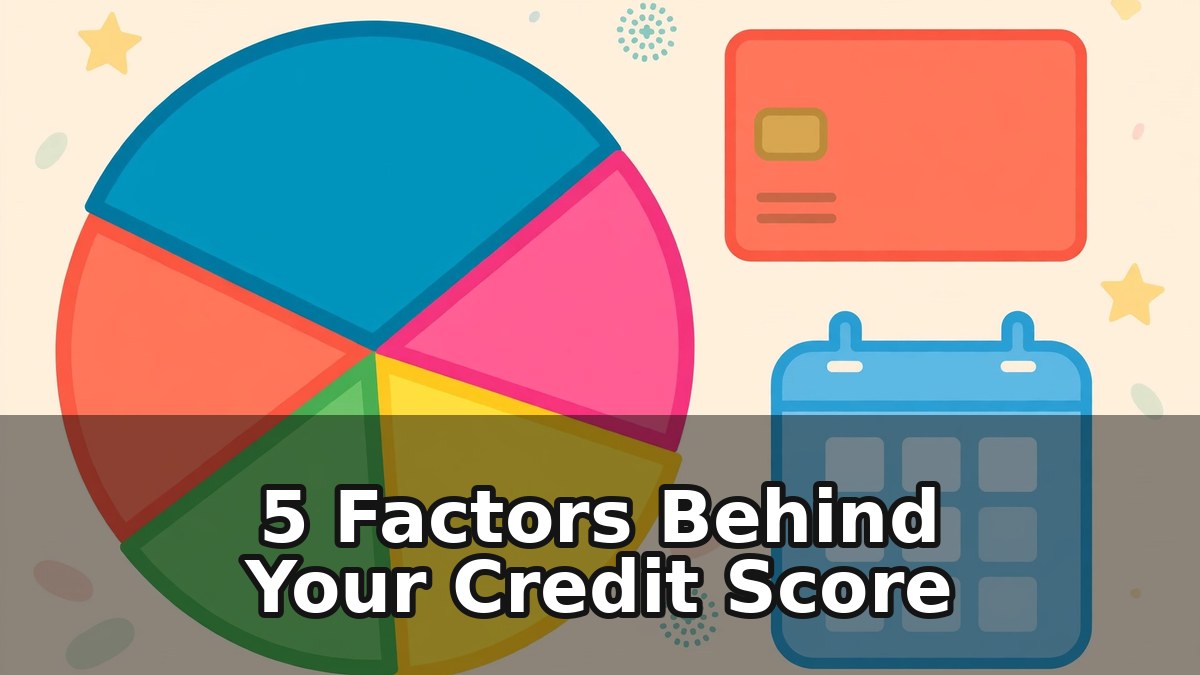
What is a credit score made of? A FICO score is built from five ingredients, and they are not weighted equally. Knowing the weights tells you exactly where to focus:
1. Payment history (35%)
The single biggest factor. Every on-time payment helps; every payment 30 or more days late hurts. A single late payment can drop a good score by 60–100 points, and it stays on your report for seven years. This is why autopay is the most powerful credit habit there is — set it for at least the minimum on every account, and for the full statement balance on credit cards.
2. Amounts owed (30%)
This is mostly about credit utilization: how much of your available credit you are using. If your card limit is $1,000 and your statement balance is $900, you are using 90% — and lenders read that as strain. Keep utilization under 30% as a rule, and under 10% if you want the best score. Paying part of your balance mid-month, before the statement closes, is a legitimate way to report a lower balance.
3. Length of credit history (15%)
Older accounts help. This is why you should not close your oldest credit card, even if you barely use it — closing it shortens your average account age and can lower your score. If you are starting from zero, patience is part of the strategy; our guide to building credit from scratch walks through the first steps.
4. New credit (10%)
Every application for new credit triggers a “hard inquiry,” which dips your score a few points for a short time. One application is harmless. Five in one month signals desperation to lenders, so space out applications and only apply when you actually need the credit.
5. Credit mix (10%)
Lenders like to see that you can handle different kinds of credit responsibly — for example, a credit card plus an installment loan like a car loan. This is the smallest factor, and it is never worth taking on debt just to “diversify.” A single well-managed card is enough to build a strong score.
What Is a Credit Score and Why It Matters Beyond Loans
What is a credit score used for? Your score affects more than mortgage and card approvals. Landlords often check it before renting to you, insurers in many states use a version of it to set premiums, and some employers check credit reports (not scores) for roles that handle money. A good score can save you thousands: on a $300,000 mortgage, the difference between a fair and a very good score can mean a full percentage point on the rate — roughly $200 a month, or $72,000 over the life of the loan. That is why building your score is one of the highest-return financial habits you can adopt, and it costs nothing but consistency.
7 Steps to Improve Your Credit Score

Step 1: Pay every bill on time, every time
Payment history is 35% of your score, so this is step one, two, and three. Set up autopay for at least the minimum payment on every account, then check statements monthly. If you ever miss a payment, pay it immediately — a payment that is only a few days late usually is not reported, but 30 days late is.
Step 2: Bring your utilization under 30%
List your cards, their limits, and their balances. Pay down the highest-utilization card first, or spread balances so no single card is maxed out. If you cannot pay a balance down quickly, ask your issuer for a higher limit — the same balance against a bigger limit means lower utilization. Just do not use the extra room to spend more.
Step 3: Check your credit reports and dispute errors
Pull your free reports at AnnualCreditReport.com and read them line by line. Look for accounts you do not recognize, wrong balances, and payments marked late that you actually made on time. Dispute errors with the bureau in writing — the Consumer Financial Protection Bureau’s credit reporting guide explains the process, and a corrected error can lift your score within weeks.
Step 4: Do not close old accounts
Your oldest card is quietly adding points through length of history. Keep it open and use it for one small recurring charge (a streaming subscription, for example) paid in full each month. Closing it hurts twice: your average account age drops and your total available credit shrinks, raising your utilization.
Step 5: Use a credit card the right way
You do not need debt to build credit — you need activity. One card, used for purchases you would make anyway and paid in full every month, builds payment history and low utilization at the same time. Our beginner’s guide to credit cards covers the seven rules that keep card use debt-free.
Step 6: Limit new applications
Apply for new credit only when you need it, and avoid rate-shopping sprees. One exception: when shopping for a mortgage or auto loan, multiple inquiries within a short window (usually 14–45 days) are typically counted as a single inquiry, since lenders expect you to compare rates.
Step 7: Be patient — and keep going
There is no overnight fix, and anyone selling one is selling a scam. Most improvements show up within 1–3 months (lower utilization, corrected errors), while payment history builds over 6–12 months. The good news: the habits are simple, and every month of on-time payments pushes the score in the right direction. Pair this with a budget that actually works so the money for on-time payments is always there.
What Does Not Affect Your Credit Score
A few myths are worth clearing up, because they cause needless worry. Checking your own score or report never hurts it — that is a “soft inquiry.” Your income, job title, bank balance, and age are not part of the score. Rent and utility payments usually do not appear on your report at all, unless you miss them badly enough to be sent to collections. And debit card use does not build credit, since no borrowing is involved — only credit accounts do.
What Is a Credit Score? Quick Q&A
What is a good credit score in 2026? — 670 or above is good, 740 or above is very good and unlocks the best rates. Below 580, approvals get difficult and expensive.
How can I check my credit score for free? — Many banks and card issuers show your score free in their app. For your full reports, use AnnualCreditReport.com — free weekly from all three bureaus. Avoid sites that charge for a “free” score and then bill you monthly.
How long does it take to improve a credit score? — Small wins (lower utilization, disputed errors) can show in 1–3 months. Rebuilding after missed payments takes longer — typically 6–12 months of consistent on-time payments before the improvement is obvious.
Does paying off a loan hurt my score? — It can dip slightly in the short term, because you lose an active account and your credit mix narrows. It is still the right move — the interest you save beats a temporary few points, and your score recovers as your remaining accounts age.
Can I have a credit score with no credit cards? — Yes, if you have other credit accounts (a student loan, auto loan, or mortgage) reporting to the bureaus. But a single card, managed well, is the simplest way to build and maintain a score.
Should I pay someone to fix my credit? — Usually no. Everything a credit repair company does — disputing errors, requesting corrections — you can do yourself for free. Legitimate disputes work; paying to remove accurate negative information does not.
Keep Reading
- How to Build Credit From Scratch: A Beginner’s US Guide (2026)
- Credit Cards for Beginners: How to Use One Without Falling Into Debt (2026 Guide)
- How to Create a Budget That Actually Works (The 50/30/20 Rule Explained)
- How to Get Out of Debt: Snowball vs Avalanche Method (2026)
- Best Budgeting Apps for Beginners in 2026 (7 Tested Picks)
In short, what is a credit score? It is the three-digit summary lenders use to judge risk, and improving what is a credit score on your file can mean lower rates and easier approvals.
This article is for educational purposes only and is not financial advice. Credit scoring rules, rates, and bureau policies change — do your own research and consider speaking with a qualified professional before making financial decisions.