
Learning how to build credit from scratch feels like a catch-22: you need credit to get credit, but nobody will give you credit without a history. If you are starting with a “thin file” — the industry’s term for no credit history — landlords, lenders, and even employers may treat you as a risk by default. The good news? Millions of people start from zero every year and reach a 700+ score within 12–18 months. You do not need tricks or hacks — just a few simple rules, followed patiently. This beginner’s guide shows you exactly how.
What a Credit Score Is (and Why Yours Matters)
A credit score is a three-digit number, usually between 300 and 850, that predicts how likely you are to repay borrowed money. The most widely used version is the FICO Score, and lenders use it as a quick trust rating before handing you money. But here is the part beginners miss: your score matters even when you are not borrowing. A thin or low credit file can mean a rejected apartment application, a bigger utility deposit, higher car insurance premiums in most states, and even a lost job offer — many employers run credit checks for money-handling roles.
How Your FICO Score Is Calculated
Understanding the formula tells you exactly where to put your effort:
- Payment history — 35%. The biggest slice. On-time payments are the single most powerful thing you can do.
- Amounts owed (utilization) — 30%. How much of your available credit you use. Lower is better.
- Length of credit history — 15%. Rewards patience — and punishes closing old accounts.
- Credit mix — 10%. More than one type of credit (a card plus a loan) helps a little.
- New credit — 10%. Every application is a “hard inquiry.” A few are fine; a pile looks desperate.
Notice what is NOT on the list: your income, savings, or job title. Scores measure behavior, not wealth.
How to Build Credit From Scratch in 6 Steps
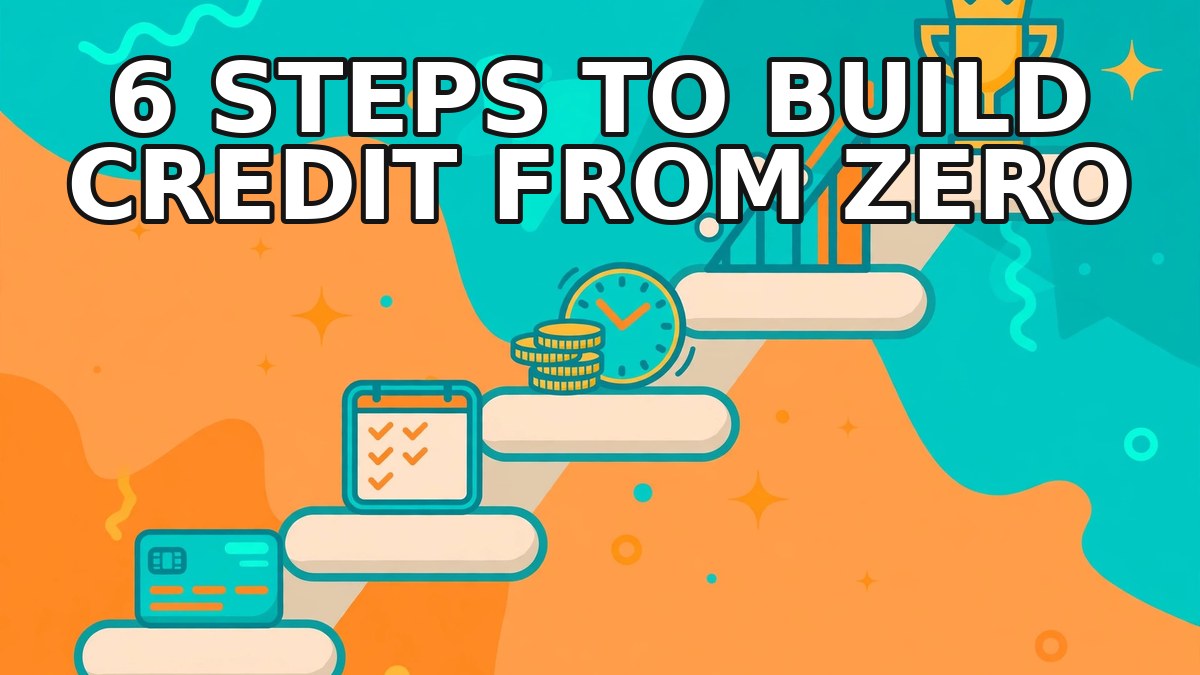
Work through the steps below in order — each one is designed for someone learning how to build credit from scratch, even with a completely blank file.
Step 1: Find out whether you even have a credit file
Before doing anything, check. Visit AnnualCreditReport.com — the only official source for free reports from all three bureaus — and see what is there. Many banks also show you a free FICO score in their app. If nothing comes up, you truly are starting from zero, and that is fine. This step takes ten minutes and tells you exactly where you stand.
Step 2: Open a secured credit card
This is the classic first move when learning how to build credit from scratch. A secured card requires a refundable deposit — usually $200 to $300 — which becomes your credit limit. You are not really “borrowing” in the risky sense; the deposit covers the bank. Use the card for one small recurring purchase (a streaming subscription, groceries), then move to Step 4. Popular starter options like Discover it Secured or the Capital One Platinum Secured have no annual fee and report to all three bureaus — which is the whole point.
Step 3: Keep your utilization low
Utilization means the percentage of your limit you use. If your limit is $300 and you spend $270, that is 90% — and it tanks your score even if you pay it off. Stay under 30% at all times; under 10% is ideal for fast score growth. On a $300 limit, that means keeping the reported balance below $90, and ideally below $30. For anyone learning how to build credit from scratch, utilization is the fastest-moving piece of the score.
Step 4: Set up autopay and never miss a payment
Remember: payment history is 35% of your score. One 30-day-late payment can haunt a thin file for years. Set up automatic payments for at least the minimum due, then pay the full statement balance manually each month to avoid interest. Autopay is your safety net; the manual full payment is your wealth habit.
Step 5: Add a booster — credit-builder loan or authorized-user status
Once your secured card is humming along, consider a second account type to help the “credit mix” slice:
- Credit-builder loan: The “loan” amount sits in a locked savings account while you make monthly payments; you get the cash (minus fees) at the end. It reports payment history to the bureaus.
- Authorized user: A trusted family member with good credit adds you to their old, well-managed card, and their history appears on your file. Only do this with someone whose habits are genuinely excellent — their mistakes become yours too.
One booster is plenty.
Step 6: Let time do its quiet work
This is the step everyone wants to skip when learning how to build credit from scratch. Your first FICO score appears after about six months of reported activity. From there, perfect habits compound exactly like interest: our compound interest guide explains the math, but the principle is identical — small, consistent actions grow into something large. Keep accounts open, keep balances low, and resist the urge to apply for five cards in a month.
How Long It Takes to Build Credit From Scratch
Set honest expectations so you do not quit in month three. With the steps above: your first FICO score appears at ~6 months (typically 620–680); 680+ is realistic by 12 months with zero missed payments; 700–740 — where good apartments and unsecured cards start saying yes — is achievable in 12–18 months; 750+, where the best rates live, takes 24+ months. That is an honest, realistic timeline for learning how to build credit from scratch.
Building credit is a marathon measured in billing cycles, not days. The people who fail are the ones who sprint — opening four accounts, maxing one out, missing a payment — and conclude “credit doesn’t work.” It works. It just works slowly.
5 Credit-Building Mistakes to Avoid
1. Applying for cards you cannot get yet. Every application is a hard inquiry, and ten inquiries with zero approvals is a red flag pattern. If a card’s page says “good to excellent credit required,” it is not for you yet. Stick to secured and starter cards until your score crosses 670+.
2. Carrying a balance “to build credit.” This is the most expensive myth in personal finance. You do NOT need to pay interest to build credit — the bureaus only see that you paid on time, not that you paid interest. Pay in full every month. (If debt is already dragging you down, our snowball vs. avalanche guide compares the two proven payoff methods.)
3. Closing your first card too soon. That secured card with the tiny limit is doing quiet work on the “length of history” slice. Once you graduate to an unsecured card, keep the old one open with a tiny recurring charge — or at minimum, do not close it in your first two years.
4. Co-signing someone else’s loan. Co-signing means their missed payments land on YOUR file. When you are building from scratch, one late payment can undo a year of work. Say no, even to family, until your own foundation is solid.
5. Assuming debit cards or buy-now-pay-later build credit. They mostly do not. Debit spending never touches your credit file, and most BNPL plans only report if you default — meaning they can hurt but rarely help. If an account does not report on-time payments to the bureaus, it is not building your credit.
Building Credit: Quick Q&A
Can I build credit without a credit card?
Yes, but it is slower. Credit-builder loans, some rent-reporting services, and authorized-user status all add history. That said, for most beginners learning how to build credit from scratch, a secured card remains the fastest single tool.
Does checking my own credit hurt my score?
No. Checking your own score is a “soft inquiry” and never affects it. Only applications for new credit create hard inquiries. Check freely — the Consumer Financial Protection Bureau recommends reviewing your reports regularly.
What is a good first credit score to aim for?
Aim for 700. That is the line where life gets noticeably easier: approvals get faster, deposits get smaller, and interest rates drop. Anything above 670 is “good”; above 740 is “very good.”
Does paying rent build my credit?
Usually not automatically — most landlords do not report to bureaus. Rent-reporting services can add it, but verify the service reports to the bureaus you care about before paying for it.
How do I get my first card with no history at all?
A secured card is designed exactly for this — approval is based on your deposit, not your history. Student cards (if you are enrolled) and some starter cards with no credit history requirement are the other doors in.
Keep Reading
- How to Create a Budget That Actually Works (The 50/30/20 Rule Explained)
- 10 Simple Ways to Save Money on a Low Income
- Emergency Fund: How Much Do You Really Need in 2026?
- What Is Compound Interest? (Explained With Real Examples)
This article is for educational purposes only and is not financial advice. Do your own research and consider speaking with a qualified professional before making financial decisions.