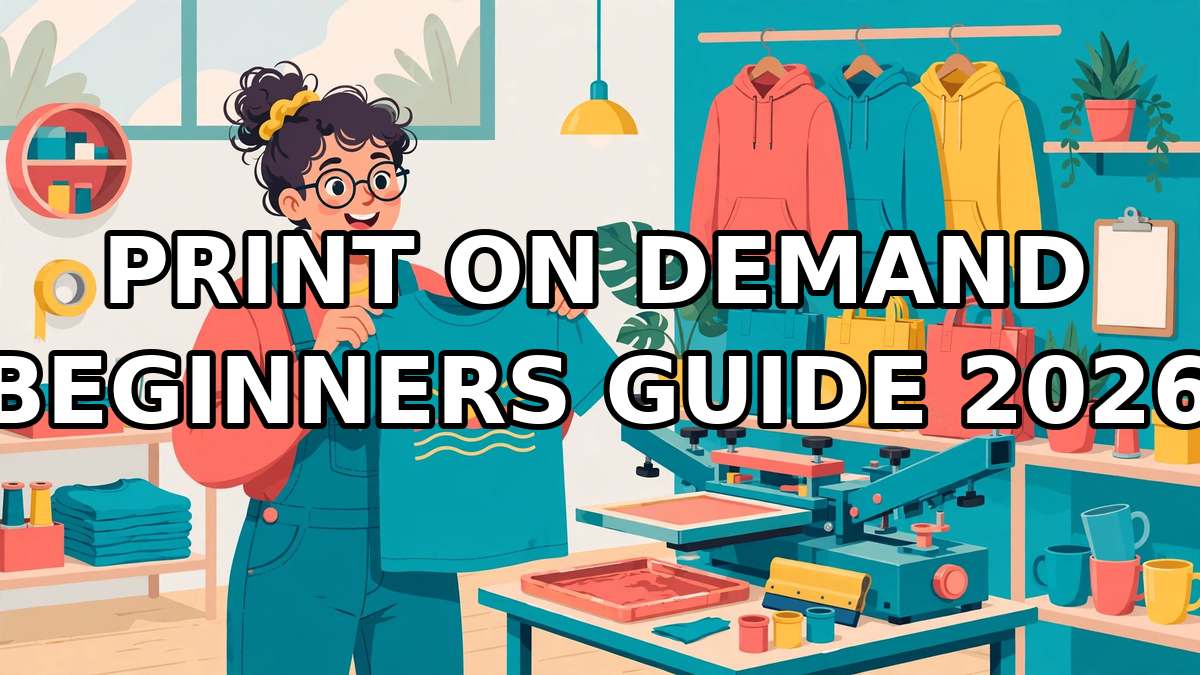
Selling physical products online sounds like it requires a warehouse, boxes, and a shipping account. Print on demand removes all three. You upload a design, a customer buys a t-shirt with that design on it, and a third-party company prints and ships it — you never touch a single product. That is the whole business model, and in 2026 print on demand for beginners is one of the most beginner-friendly ways to start earning online.
This guide walks you through exactly how print on demand for beginners works: the best platforms to start on, how to create designs without any design background, and a step-by-step plan to launch your first product this week.
How Print on Demand Actually Works
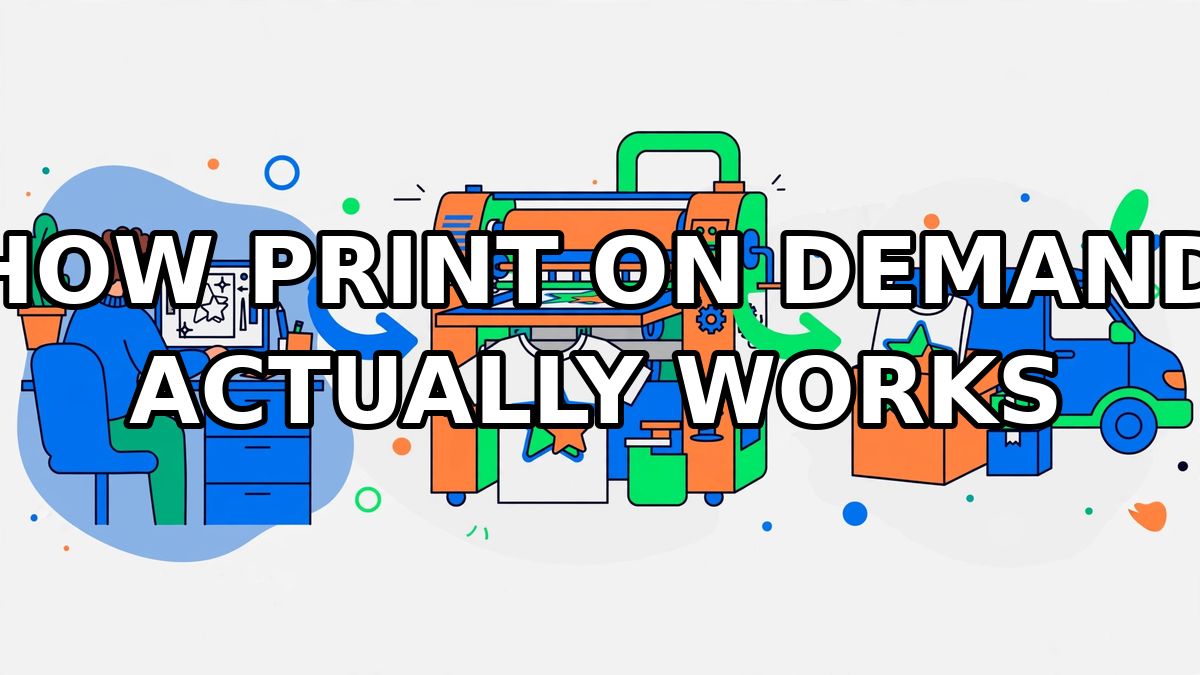
Print on demand (POD) is a fulfillment method, not a website. Here is the flow every time a sale happens:
- You create the design. A graphic, a funny quote, a niche illustration — anything printable.
- You upload it to a product. The platform shows your design on t-shirts, hoodies, mugs, posters, and dozens of other blank products.
- A customer orders. They pay the full retail price (say, $24.99 for a shirt).
- The POD company prints and ships. You pay the base cost (say, $12.50), and the company handles printing, packaging, and delivery.
- You keep the difference. In this example, about $12 per shirt — with zero inventory risk.
You never buy stock upfront. If nobody orders, you lose nothing but your time. That is what makes this model so different from traditional retail: the product does not exist until someone pays for it.
Most beginners sell through one of two routes — their own storefront (Etsy or Shopify) powered by a POD supplier, or a marketplace (like Amazon Merch on Demand) where the platform brings the buyers. Both work; they just demand different skills.
Why Print on Demand Is Perfect for Beginners
Several traits of this model line up perfectly with a first-time seller exploring print on demand for beginners:
- No upfront inventory cost. Starting capital can be literally zero — many POD platforms are free to join.
- No shipping logistics. You never pack a box, visit a post office, or handle returns.
- Location independent. The whole business runs from a laptop, which makes it a natural fit alongside freelancing or other side hustles.
- Skills are learnable fast. Basic design tools have templates and tutorials for everything; niche research is a learnable skill.
- Scales without employees. Your tenth sale costs you no more effort than your first — the POD company does the work.
The honest tradeoff: margins are thinner than holding your own inventory, and you depend on the POD company’s quality and speed. Choose your supplier carefully and the tradeoff is worth it.
Best Print-on-Demand Platforms for Beginners
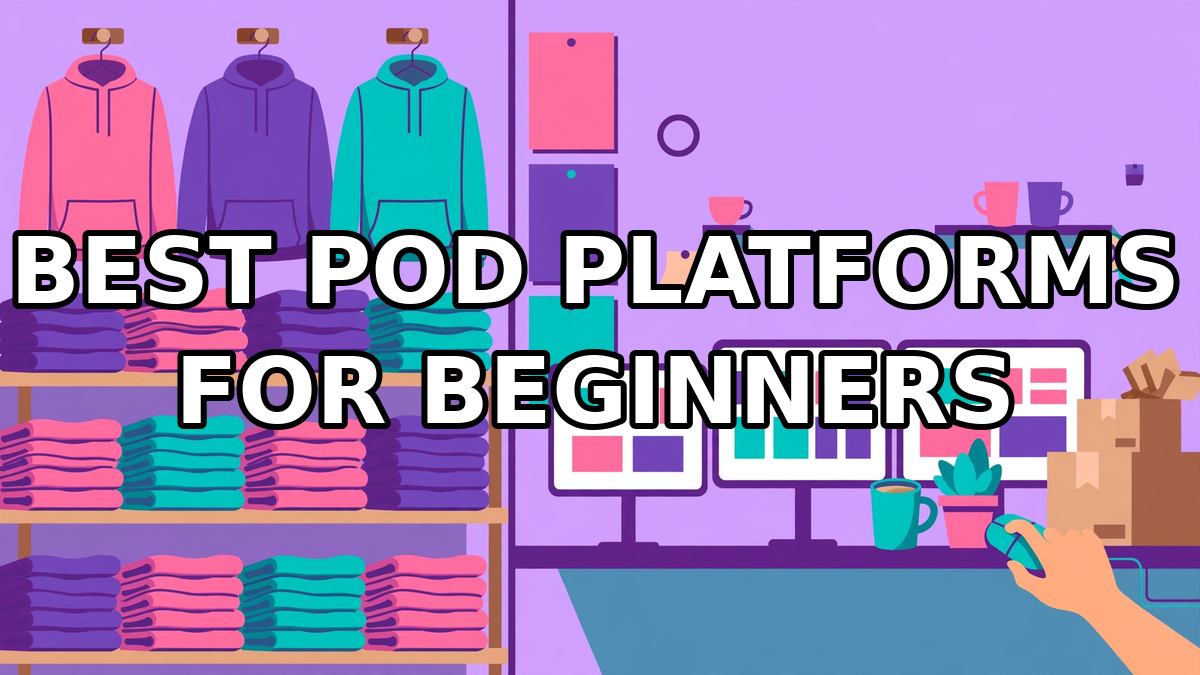
Not all POD platforms suit beginners. These five are the easiest entry points in 2026. Picking the right home base is the most important decision in print on demand for beginners:
Printful — The quality leader. It integrates with Etsy, Shopify, Amazon, and more, prints in the US and Europe for fast delivery, and has excellent product photography tools. Slightly higher base costs than competitors, but reliability is worth it when your brand is new.
Printify — The budget option. It connects you to a network of print providers so you can shop for the lowest base cost per product — which means higher profit margins. Quality varies between providers, so order samples before you commit to one.
Amazon Merch on Demand — The traffic option. Amazon puts your designs in front of the biggest buyer pool on earth — no store building, no ads needed. It is invite/approval based and more competitive, but the traffic is free, which is a massive advantage for beginners.
Redbubble / TeeSpring (Spring) — The zero-effort option. Upload designs, and these marketplaces handle storefront, traffic, and fulfillment. You earn a smaller margin per sale, but you do zero marketing. Good for testing which designs resonate before investing in your own store.
Etsy + a POD supplier — The sweet spot for many beginners. Etsy brings millions of buyers actively searching for unique, niche designs; Printful or Printify handles fulfillment behind the scenes. You get marketplace traffic without building a website.
| Platform | Best For | Starting Cost |
|---|---|---|
| Printful | Quality and fast delivery | Free to join; higher base costs |
| Printify | Lowest base costs | Free to join |
| Amazon Merch on Demand | Built-in buyer traffic | Free; approval-based |
| Redbubble / Spring | Zero-effort design testing | Free; smaller margins |
| Etsy + POD supplier | Brand control plus marketplace traffic | About $0.20 listing fees plus base costs |
Which to pick? If you want the fastest start with zero marketing, go Amazon Merch on Demand or Redbubble. If you want to build a real brand with better margins, open an Etsy shop connected to Printful or Printify. You can run both in parallel — many sellers do.
How to Design Products That Sell
Beginners assume they need to be artists. They don’t. When it comes to print on demand for beginners, the designs that sell are rarely fine art — they are clear ideas aimed at specific niches. Here is how to create them:
Step 1: Pick a niche, not a product. “Nurses,” “dog dads,” “fishing grandpas,” “real estate agents” — POD buyers shop by identity. A shirt that says exactly what their group feels outsells a generic cool design ten to one. Pick 2–3 niches you understand.
Step 2: Research what is already selling. Search your niche on Etsy or Amazon and note which designs repeat: certain phrases, fonts, and layouts. You are not copying — you are learning the visual language the niche responds to. Printful’s own trend and design guides are a solid free resource for what is currently moving.
Step 3: Use beginner-friendly design tools. Canva (free tier) handles text-based designs perfectly. Photopea is a free browser-based Photoshop alternative for more complex work. Both have templates sized for t-shirt printing. For fonts, use Google Fonts — they are free for commercial use.
Step 4: Keep designs simple. The best-selling POD designs follow one rule: readable at arm’s length in two seconds. One strong phrase, one clean font pairing, maybe one small graphic. Cluttered designs lose.
Step 5: Get the technical basics right. Export at 300 DPI in PNG with a transparent background. Use the POD platform’s template for placement size. This five-minute step is what separates professional-looking products from amateur ones.
Idea shortcuts when you are stuck: niche holidays (National Nurse Week, Father’s Day), trending phrases in your niche’s subreddits and Facebook groups, and parody-style twists on classic sayings (kept legally safe — never use trademarked names, logos, or celebrity likenesses).
Launch Your First Product in 7 Steps
Do these in order — this print on demand for beginners launch plan takes just one weekend.
- Choose your platform. Pick one from the list above (Etsy + Printful is the recommended beginner combo).
- Create your accounts. Sign up for the marketplace and the POD supplier, then connect them following the supplier’s integration guide.
- Design 5–10 products. Aim for a small collection in ONE niche rather than random designs across ten niches.
- Order a sample. Buy one of your own products to check print quality, colors, and sizing. Fix anything off before real customers see it.
- Write titles and descriptions for search. Use the exact words a buyer would type (“funny nurse t-shirt,” “fishing grandpa hoodie”). Fill all 13 Etsy tags. Good SEO is free traffic.
- Publish and price for profit. Base cost + marketplace fees + your margin = retail price. Do not underprice to “get sales.”
- Promote your first 10 sales. Share in niche Facebook groups and subreddits (following their rules), post your designs on Pinterest and TikTok, and ask friends in the niche to share. Your first reviews are what the algorithm needs to start showing you.
7 Print-on-Demand Mistakes Beginners Must Avoid
Avoid these print on demand for beginners mistakes and you will start ahead of most new sellers:
- Stealing designs or using trademarks. Using a brand name, sports team, or celebrity on your products gets your shop shut down. Create original work only.
- Designing for “everyone.” “Cool t-shirts” is not a niche. “Funny shirts for bearded dads who fish” is a niche. Specificity sells.
- Ignoring SEO. The best design in the world earns zero if nobody finds it. Titles, tags, and descriptions are half the business.
- Skipping the sample order. Colors shift between screen and fabric. One $20 sample saves you from one-star reviews.
- Pricing too low. A $2 margin per shirt means you need 500 sales to matter. Price for a margin that makes each sale worth it — usually $8–$15 on apparel.
- Quitting after 10 designs. Print on demand for beginners is a numbers game early on. Sellers who publish 50+ designs learn what works.
- Spending on ads before anything sells organically. If a design gets zero organic traction, ads will not save it. Get your first sales free, then amplify winners.
Print on Demand for Beginners: Quick Q&A
Q: How much money do I need to start print on demand? A: You can start with $0 — the major platforms are free to join and you pay base costs only when a sale happens. A realistic small budget of $30–$50 for sample orders is smart but optional.
Q: How much can beginners realistically make with print on demand? A: Expect $0–$200/month in the first 2–3 months while you build your catalog, then $300–$1,000+/month as designs accumulate and SEO compounds.
Q: Is print on demand too saturated in 2026? A: Generic designs are saturated. Niches are not. Sellers serving specific communities with original ideas still grow steadily.
Q: Do I need to be a designer to do print on demand? A: No. Text-based designs made in Canva account for a huge share of POD sales. Understanding your niche matters far more than artistic skill.
Q: Which is better: Etsy or Amazon Merch on Demand? A: Etsy gives you more control over branding and margins but requires SEO and some marketing. Amazon Merch brings massive free traffic but is more competitive and approval-based. Many beginners start on Etsy and add Amazon later.
Print on demand for beginners is one of the lowest-risk ways to start an online business in 2026. Keep this print on demand for beginners guide bookmarked, publish your first designs this weekend, and let every sale teach you what your niche wants next.
Keep Reading
These guides pair perfectly with print on demand for beginners:
- 15 Legit Side Hustles With No Money (2026 Guide)
- How to Make Money on Fiverr as a Beginner in 2026
- How to Start Freelancing With No Experience (Step-by-Step 2026 Guide)
- How to Create a Budget That Actually Works (The 50/30/20 Rule Explained)
This article is for educational purposes only and is not financial advice. Do your own research and consider speaking with a qualified professional before making financial decisions.