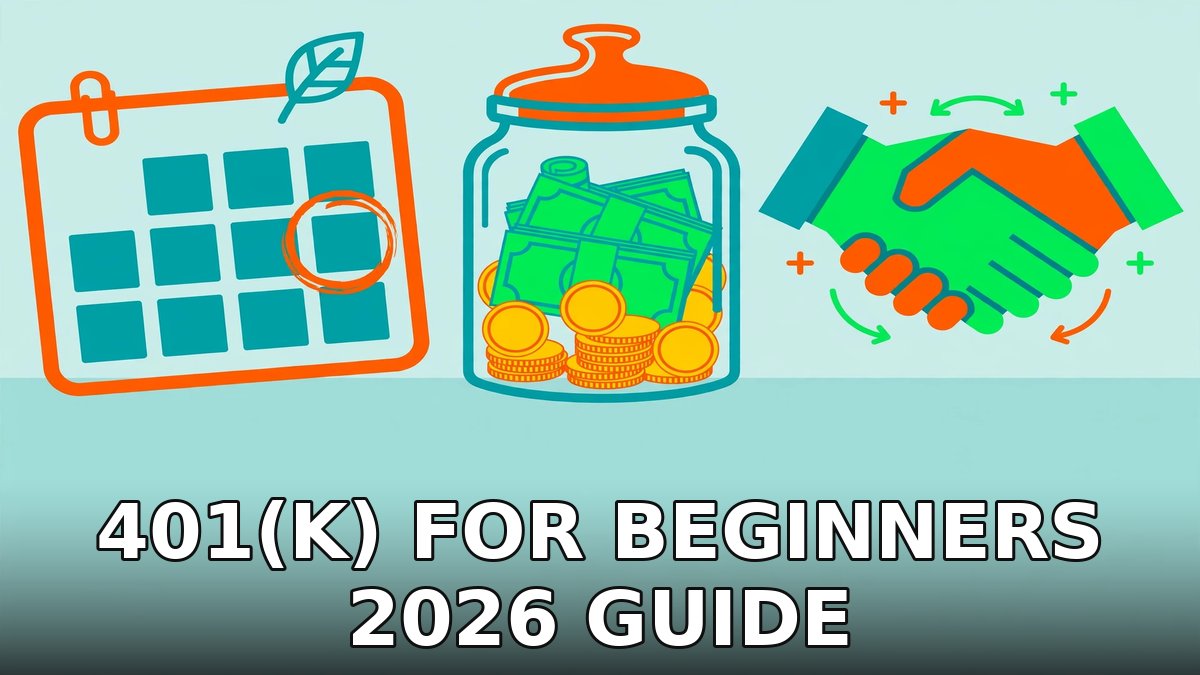
If you are starting a new job, your employer’s 401(k) for beginners paperwork might look like a foreign language: contribution percentages, vesting schedules, matching formulas. It is confusing — but it is also the single easiest way to build retirement wealth, because your employer may literally give you free money. This 401(k) for beginners guide explains how a 401(k) works in plain English, with the actual 2026 numbers and the exact steps to start today.
How Your 401(k) Actually Works: 401(k) for Beginners
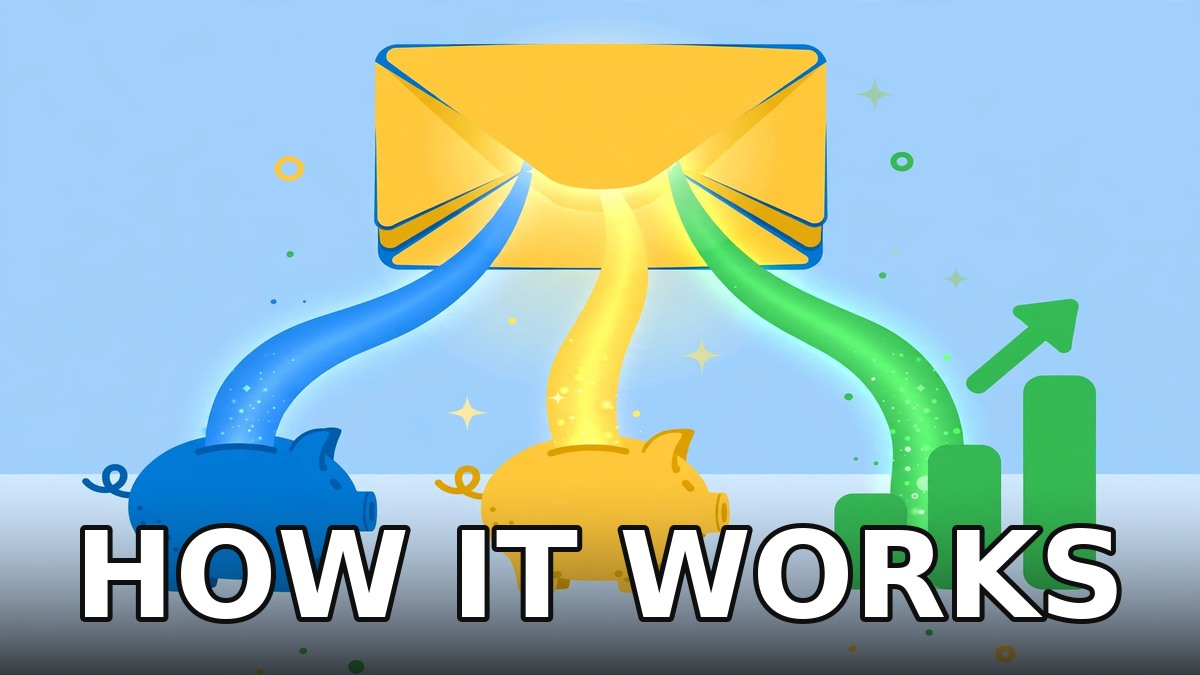
A 401(k) is a retirement savings account your employer sets up for you. Money comes straight out of your paycheck before you ever see it, which makes saving automatic — you cannot spend what never hits your checking account.
Three moving parts do the work:
- Your contributions: You choose a percentage of each paycheck to contribute. Ten percent of a $3,000 paycheck is $300 per month going to your future self.
- The employer match: Many employers add their own money on top of yours — this is free money with almost no catch. A common formula is “100% match on the first 3% of your salary, then 50% on the next 2%.”
- Tax-advantaged growth: Traditional 401(k) contributions reduce your taxable income today, and investments grow tax-deferred until retirement. Some employers also offer a Roth 401(k) option: no tax break now, but tax-free withdrawals later (Roth vs Traditional IRA guide).
Vesting is the one catch on the match. You always own 100% of your contributions, but employer matching dollars may “vest” — become fully yours — on a schedule. Many plans use a 3-year cliff (you own all of the match after 3 years) or a gradual schedule. Leave before you vest, and some matched money goes back. Every 401(k) for beginners should check the plan’s summary document before switching jobs.
401(k) Contribution Limits in 2026
The IRS caps how much you can put in each year, and the numbers adjust for inflation. Here are the key 2026 limits every 401(k) for beginners should know:
| Item | 2026 Limit |
|---|---|
| Employee contribution (under 50) | $24,500 |
| Catch-up contribution (age 50+) | $8,000 extra ($32,500 total) |
| Total combined limit (you + employer, under 50) | $72,000 |
| Highly compensated employee threshold | $160,000 of income |
Do not let the big numbers intimidate you. The median 401(k) contribution rate is around 7–8% of pay — at a $50,000 salary, that is roughly $300–$330 a month. Starting small beats waiting years to start “properly,” because compound interest rewards time in the market more than it rewards perfect amounts.
Roth 401(k) vs Traditional 401(k): Which One to Choose?
Many employers now offer two flavors of the same plan, and for 401(k) for beginners, your choice changes when you pay tax.
- Traditional 401(k): contributions come out of your paycheck pre-tax, shrinking this year’s taxable income. Investments grow tax-deferred, and you pay income tax on withdrawals in retirement.
- Roth 401(k): contributions come out after-tax — no tax break today. But qualified withdrawals in retirement are completely tax-free, including decades of growth.
Which is better for 401(k) for beginners? It comes down to your tax rate today versus your expected tax rate in retirement. If you are early in your career and in a low bracket (roughly 22% or below), Roth contributions often win — you are paying tax at the lowest rate you may ever see. If you are in a high bracket now and expect to drop in retirement, Traditional usually wins because the upfront deduction is worth more.
Two details beginners miss. First, the employer match always goes into the Traditional (pre-tax) bucket, even if every dollar of yours is Roth. Second, you can split your own contributions — say 5% Traditional and 5% Roth — as a built-in hedge when you cannot decide. Either way, for 401(k) for beginners, the most important decision is participating at all, not picking the perfect tax flavor.
401(k) vs IRA: Which Should You Fund First?
Beginners often wonder whether to open an IRA or use the 401(k). This 401(k) for beginners guide follows the standard order most planners recommend:
- Contribute enough to your 401(k) to get the FULL employer match. This is an instant 50–100% return on that money. Nothing else in investing beats it — skipping the match is leaving part of your salary on the table.
- Open an IRA (usually a Roth for beginners). IRAs typically offer cheaper funds and more investment choices than a 401(k). Our Roth vs Traditional IRA guide walks through picking one.
- Go back and increase your 401(k) beyond the match, up to the annual limit, once the IRA is funded.
Why not max the 401(k) first? Investment fees. Many employer plans have limited fund menus with expense ratios of 0.5–1%, while an IRA at a low-cost provider lets you buy index funds at 0.03%. That fee gap can cost tens of thousands over a career — our index funds vs. individual stocks guide explains what to buy either way.
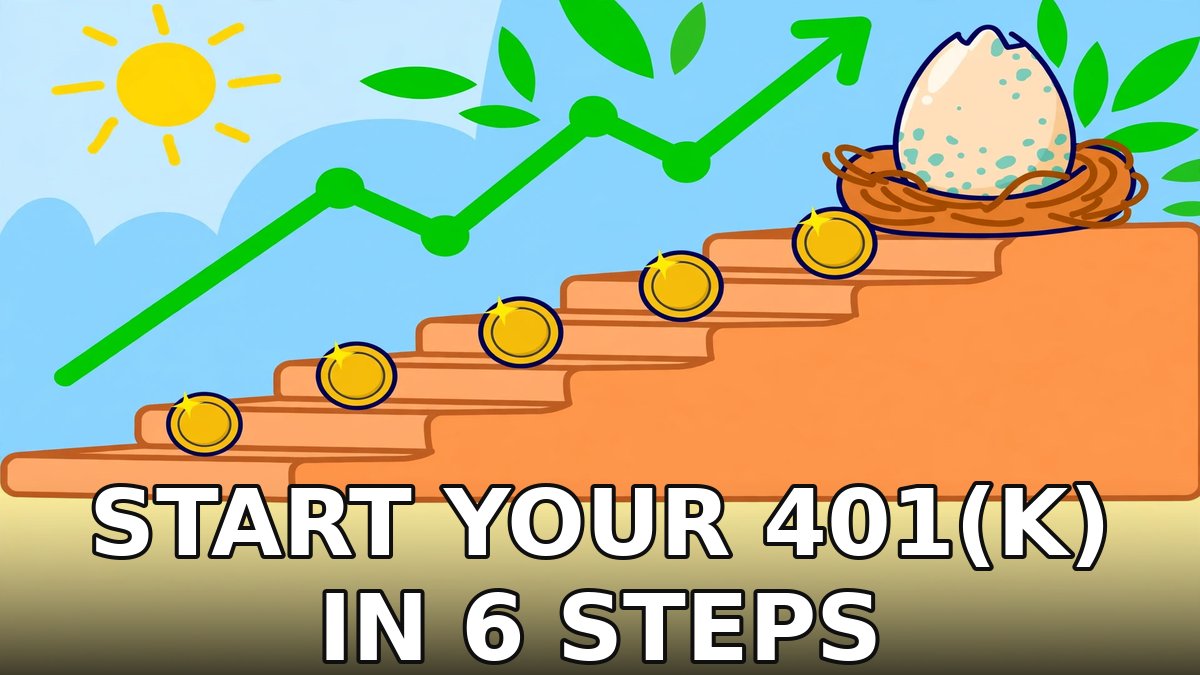
Start Your 401(k) in 6 Steps: A 401(k) for Beginners Checklist
Step 1: Find your enrollment paperwork
As a 401(k) for beginners, your HR portal or benefits packet has the plan details. Some employers auto-enroll you at 3% — check; you can almost always change the rate.
Step 2: Read the matching formula
Find the exact sentence about the match. “Dollar-for-dollar up to 3%, then fifty cents up to 5%” is common. Your minimum contribution target = whatever unlocks the full match.
Step 3: Pick Traditional vs Roth contributions
Traditional lowers this year’s tax bill; Roth (if offered) gives tax-free withdrawals later. Early-career beginners in lower brackets often favor Roth; higher earners favor Traditional. You can split between both.
Step 4: Set your contribution percentage
At least the full match — never less. If you can afford more, aim toward 10–15% of pay over time. Start at the match today and raise it 1% each time you get a raise; you will never miss money you never saw.
Step 5: Choose your investments
If your plan offers a target-date fund matching your expected retirement year (e.g., “Target 2060 Fund”), picking that one fund is a perfectly respectable choice — it auto-adjusts from aggressive to conservative as you age. Avoid leaving contributions in the plan’s default “stable value” or money-market option, where growth barely beats inflation.
Step 6: Confirm and forget (mostly)
Check your first pay stub to confirm the deduction started. Then check the account once or twice a year — not daily. Our investing with $100 guide covers the same calm, long-term mindset for your first investments.
5 401(k) Mistakes Beginners Make
- Not contributing enough to get the full match. This is the single most expensive 401(k) for beginners mistake — an instant, guaranteed return you cannot get anywhere else. Fix it today: it takes one HR form.
- Cashing out when you change jobs. Quitting and withdrawing the balance triggers income tax plus a 10% penalty if you are under 59½ — a $10,000 cash-out can shrink to $6,500 after taxes and penalties. Roll it into your new employer’s plan or an IRA instead; both are tax-free moves.
- Ignoring the vesting schedule. That match money is not fully yours until you vest. Switching jobs at year two of a three-year cliff can cost you thousands in matched dollars. Time big career moves with vesting dates when you can.
- Taking a 401(k) loan for non-emergencies. Most plans let you borrow from yourself, and it sounds harmless — but the money is out of the market while you repay it, and if you leave the job, the loan usually comes due fast. Keep a separate emergency fund so your retirement account stays untouched.
- Setting it and never increasing it. Auto-enrollment at 3% is a start, not a plan. The “raise it 1% per raise” rule gets you from 3% to 10% in seven years without ever feeling a pinch — that difference can be worth six figures at retirement.
401(k) for Beginners: Quick Q&A
What happens to my 401(k) if I quit my job?
It stays yours. Leave it with the old employer, roll it into your new employer’s plan, or roll it into an IRA. All three keep the tax benefits — just never cash it out early.
Can I lose money in a 401(k)?
Yes — it is an investment account, so the balance moves with the market. Short-term drops are normal; over decades, broad-market investments have historically recovered and grown. That is why consistent contributions beat perfect timing.
Should I choose Traditional or Roth 401(k)?
Rough rule: lower tax bracket now and expecting higher income later → Roth. High earner wanting the tax break today → Traditional. Many plans let you split, which is a fine answer when you are unsure.
What is the 401(k) early withdrawal penalty?
Withdrawals before age 59½ usually cost income tax plus a 10% penalty, with limited exceptions (hardship, disability, separation at 55+). This is why the emergency fund comes first.
Do I get the match if I choose Roth contributions?
Yes — the match is calculated on your total contribution percentage, not on which tax bucket you picked. Note the matching dollars land in the Traditional pre-tax side either way.
How much should I really be saving for retirement? For 401(k) for beginners, the classic benchmark is 15% of income across all retirement accounts (including the match). Start wherever you are — even 3–5% — and increase 1% per raise until you hit your target.
Keep Reading: More 401(k) for Beginners Guides
- Roth IRA vs Traditional IRA: Which One Should Beginners Pick in 2026?
- How to Start Investing With $100 (Beginner’s Guide)
- What Is Compound Interest? (Explained With Real Examples)
- Index Funds vs Individual Stocks: What’s Better for Beginners?
- Emergency Fund: How Much Do You Really Need in 2026?
This article is for educational purposes only and is not financial advice. Tax rules and contribution limits change — do your own research and consider speaking with a qualified professional before making financial decisions.