
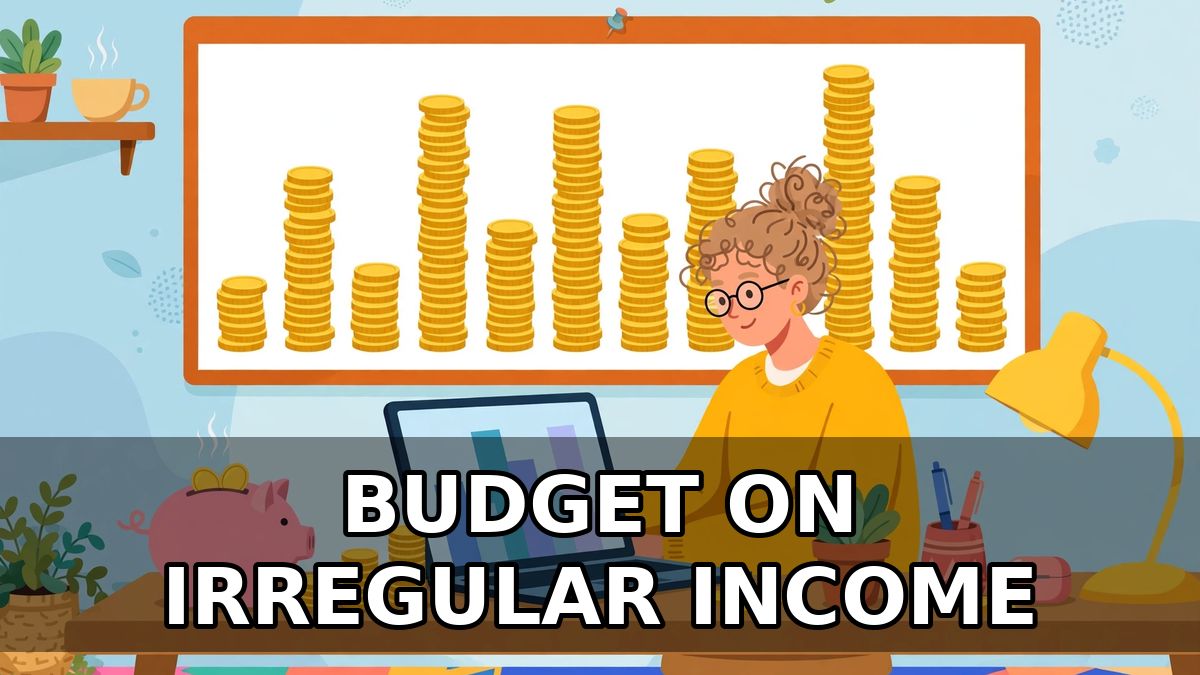
If your paycheque changes every month, learning how to budget on irregular income can feel impossible. One month you earn $4,000 and feel rich; the next you earn $1,200 and wonder how the rent will get paid. Traditional budgeting advice assumes a steady salary, so it falls apart the moment your income does not cooperate. The good news is that freelancers, gig workers, and self-employed professionals can still run a calm, predictable budget — it just works differently.

Why Budgeting on an Irregular Income Feels So Hard
Most budgeting methods were designed for people with a fixed salary. They tell you to take your monthly pay, split it into neat percentages, and repeat. When your income swings by hundreds or thousands of dollars from month to month, that neat split breaks in the first week.
The first problem is timing. A big invoice might be paid 30 days late, while rent is due on the 1st without exception. The second problem is psychology: a great month tricks you into spending like the good times will last. The third problem is taxes. If nobody withholds tax from your pay, a chunk of every payment belongs to the taxman — and forgetting that is the fastest way to turn a good year into a stressful April.
None of this means you are bad with money. It means you need a system built for variable income. The method below works whether you freelance full-time, drive for a delivery app, sell online, or mix a part-time job with side gigs. If you are just starting out as a freelancer, our guide to starting freelancing with no experience pairs well with this one.
How to Budget on Irregular Income in 7 Steps
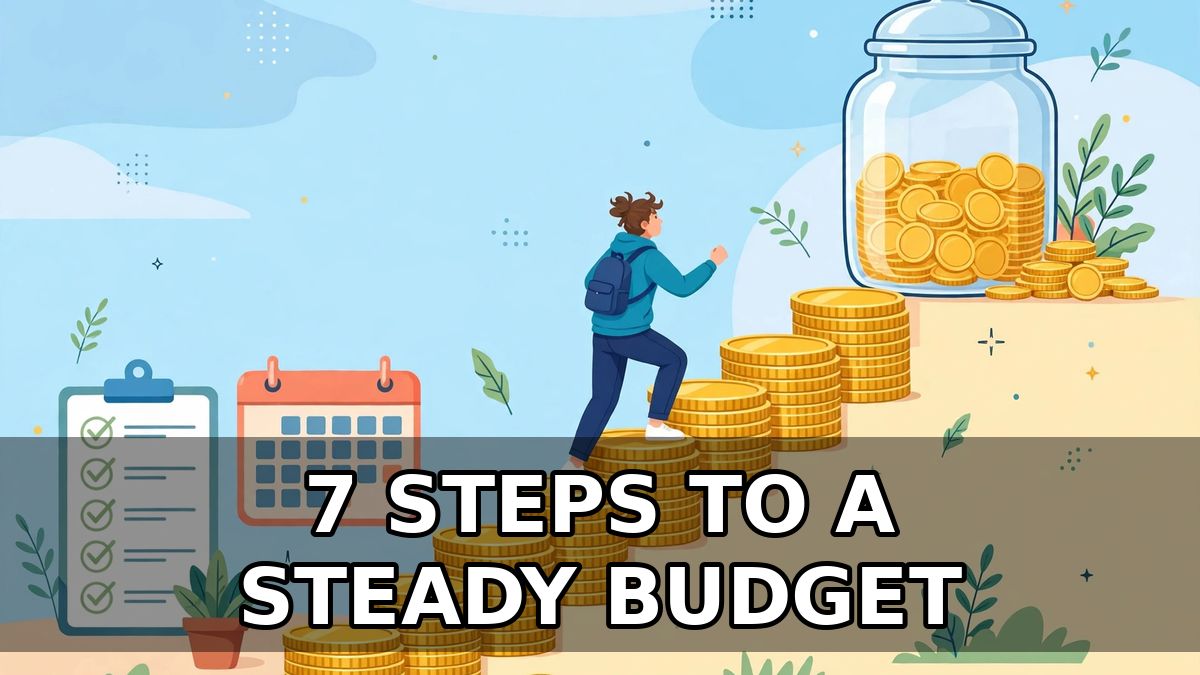
Here is the full method, step by step:
- Add up your last 6 to 12 months of income. Look at your bank statements, not your memory. Write down what actually landed in your account each month. If you have less than 6 months of history, use what you have and update the numbers monthly.
- Find your average — and your lowest month. Add the months together and divide by the number of months for your average. Then circle your lowest month. Both numbers matter, but the lowest month is the one your budget will be built on.
- List your bare-bones essentials. Rent, utilities, groceries, transport, phone, insurance, and minimum debt payments. Be honest and specific: check real bills instead of guessing. This is your survival number — the amount you must cover even in your worst month.
- Build your baseline budget on your lowest month, not your average. This is the golden rule of learning how to budget on irregular income. If your lowest recent month was $1,800, your budget is $1,800. In better months the extra goes to savings and debt, not a bigger lifestyle. The popular 50/30/20 budget rule still works here — just apply the percentages to your lowest month instead of your salary.
- Set aside tax money the moment you are paid. If you are self-employed, move 25% to 30% of every payment into a separate savings account the day it arrives. Never treat that money as yours to spend. When tax season comes, you will pay the bill calmly instead of panicking.
- Automate transfers on payday, not at month-end. On the day money arrives, move the tax slice, the buffer contribution, and the savings amount automatically. What is left in your spending account is what you can actually spend. Automation removes willpower from the equation.
- Review and adjust for 15 minutes every month. Did a client pay late? Did groceries run high? A monthly check-in keeps the budget honest — and it is where you raise your baseline when your lowest month improves.
Build Your Irregular Income Buffer

A buffer is the single most important tool for variable income — it turns a rollercoaster into a flat road. It is a self-made salary stabilizer: money set aside in good months so slow months feel normal.
Start with a goal of one month of essential expenses. If your bare-bones number is $1,800, your first buffer target is $1,800. Once you reach it, stretch the goal to three months. Keep it in a separate high-yield savings account, away from everyday spending money, so you are never tempted to dip into it for a takeaway or a sale. Our guide to high-yield savings accounts explains how to pick one that actually earns interest.
The rule for using the buffer is simple: only touch it when a month’s income falls below your baseline budget, and only take exactly the shortfall. If you earn $1,500 in a month when your baseline is $1,800, take $300 from the buffer. Then, in the next good month, refill the buffer before spending on anything fun. Treat refilling it like a bill — because it is one.
Budget on Irregular Income: Pay Yourself a Steady Salary
Here is the trick that makes the whole system feel normal: stop spending directly from your irregular earnings. Instead, pay yourself a fixed “salary” from a separate account.
Open a second bank account for your business income. All client payments land there. Then set up a standing transfer — your salary — from the business account to your personal account on the 1st and the 15th of every month. Choose a salary you can afford in a bad month: your lowest month minus tax, minus a small buffer contribution. Everything above that stays in the business account, growing your buffer and your savings.
This does three things. First, your personal spending becomes steady even when your income is not. Second, it forces you to see your real financial position — the business account balance tells you the truth. Third, it stops lifestyle creep: a $5,000 month feels like a $2,000 month in daily life, and the surplus quietly builds your security.
If money is tight while you build this system, our guide to saving money on a low income has practical ways to free up cash without borrowing.
Common Mistakes When You Budget on an Irregular Income
- Budgeting on your best month. Planning around a $4,500 month guarantees a crisis in a $1,500 month. Always budget on the lowest month you can reasonably expect.
- Forgetting taxes until April. Self-employed tax is not a surprise — it is a known bill. Set the money aside with every payment or it will come back as debt.
- Skipping the buffer to pay for fun first. A holiday or a new phone feels urgent, but an empty buffer means the next slow month becomes a credit card month. Build the buffer before the extras.
- Keeping business and personal money in one account. When money mixes together, you never know what you can spend. Separate accounts are free and change everything.
- Treating a slow month as a failure. Slow months are normal for freelancers and gig workers. That is exactly what the buffer and the steady salary are for — a slow month is a system working as designed, not a reason to quit.
- Never reviewing the budget. Your income pattern changes as you grow. A 15-minute monthly review — recommended by the Consumer Financial Protection Bureau’s budgeting guide — keeps the numbers honest.
Budgeting on Irregular Income Q&A
How much should I save from irregular income?
Aim to save at least 20% of your average monthly income, including buffer contributions and tax savings. In good months save more; in slow months the buffer covers the gap.
What if my income is too low to cover my essentials?
First, check whether your bare-bones list has anything you can cut temporarily. Then look at earning more rather than borrowing: a second gig, raising your rates, or more clients. Our guide to saving $10,000 in a year shows how small monthly gains add up.
Should I use the 50/30/20 rule with irregular income?
Yes, with one change: apply it to your lowest month, not your average. That keeps your needs covered in a bad month. In good months, send the extra money straight to savings and debt instead of raising your spending.
How big should my irregular income buffer be?
One month of essential expenses is the minimum, three months is the comfortable target, and six months is excellent if your income is very seasonal. Start with one month — reaching that first goal quickly builds momentum.
Keep Reading
- How to Create a Budget That Actually Works (The 50/30/20 Rule Explained)
- Emergency Fund: How Much Do You Really Need in 2026?
- How to Start Freelancing With No Experience (Step-by-Step 2026 Guide)
- 10 Simple Ways to Save Money on a Low Income
This article is for educational purposes only and is not financial advice. Income, tax rules, and savings rates vary by location and change over time — do your own research and consider speaking with a qualified professional before making financial decisions.