

Every busy business owner has the same problem: a hundred small tasks that have to be done, and no time to do them. Answering emails, booking appointments, posting on social media, organizing spreadsheets, chasing invoices — the list never ends. That is exactly why people are learning how to make money as a virtual assistant in 2026.
A virtual assistant, or VA, is someone who handles those tasks remotely, from home, on a flexible schedule. You do not need a degree, a fancy office, or years of experience. If you are organized, reliable, and comfortable with a laptop, you can land your first paying client within weeks. This guide explains what VAs actually do, the skills clients pay for, what to charge, and the exact steps to get started.
What Does a Virtual Assistant Actually Do?
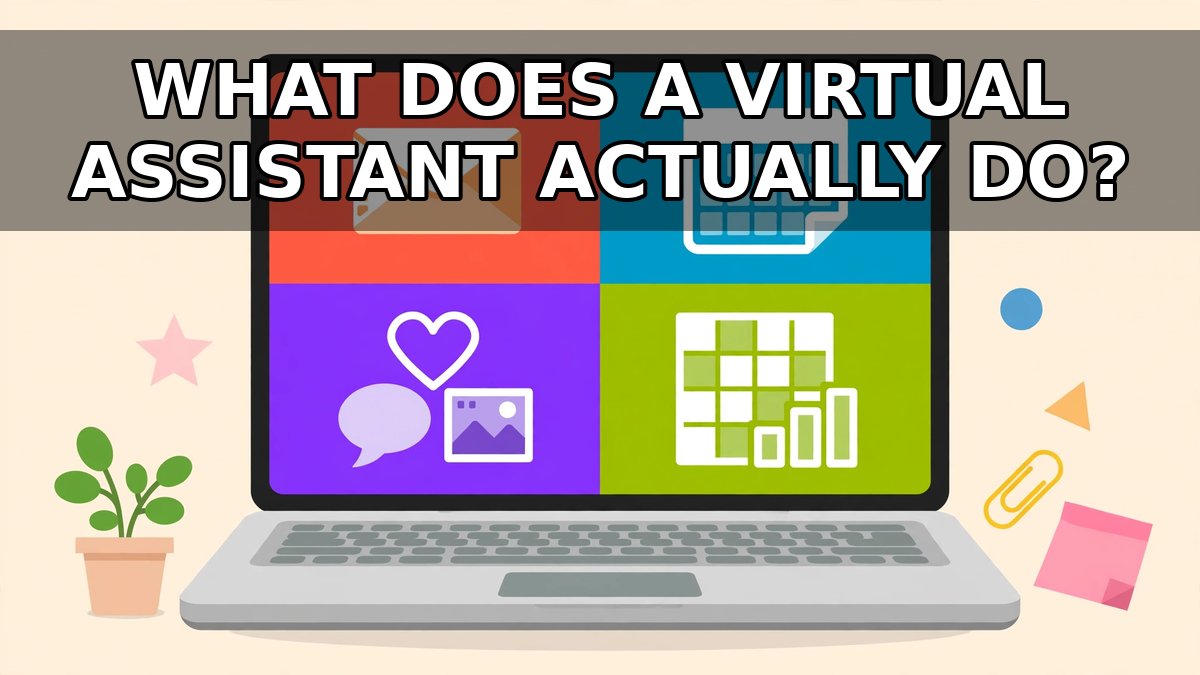
A virtual assistant is a remote helper for a business owner, a coach, a creator, or a small team. Instead of hiring a full-time office employee, the client pays a VA by the hour or by the month to take routine work off their plate. The work is varied, and that variety is part of the appeal — no two days look the same. Here are the tasks clients most often hand to a VA:
- Email management: Sorting the inbox, replying to routine messages, flagging anything urgent, and keeping the owner out of email for most of the day.
- Calendar and scheduling: Booking meetings, sending reminders, rescheduling when plans change, and keeping the week organized.
- Social media support: Scheduling posts, replying to comments, researching hashtags, and preparing simple graphics or captions.
- Data entry and spreadsheets: Updating customer lists, tracking expenses, organizing files, and keeping records tidy.
- Customer service: Answering common questions, handling refunds, and following up with buyers — often through email or chat.
- Basic bookkeeping: Sending invoices, chasing late payments, and recording transactions in simple accounting software.
- Research: Finding suppliers, comparing prices, gathering contacts, or summarizing articles and competitors.
- Content support: Uploading blog posts, formatting newsletters, transcribing videos, or proofreading drafts.
You do not need to offer all of these. Most successful VAs start with two or three services they are already good at, then add more as they learn. A beginner who is organized and writes clear emails can start with inbox and calendar work today — those two services alone are enough to land a first client.
The Skills Clients Pay For in 2026
Clients hire a virtual assistant to save time, so the skills that matter most are the ones that make their life easier. If you want to make money as a virtual assistant, focus on the skills clients actually pay for. Technical skills help, but reliability and communication matter more — a client will happily pay more for a VA who answers promptly and never misses a deadline. These are the skills worth building first:
- Clear written communication: Most VA work happens in writing — emails, messages, documents. If you can write short, polite, error-free messages, you are already ahead of most beginners.
- Organization and time management: Clients hand you ten tasks at once. Keeping a simple to-do list, meeting deadlines, and flagging problems early is what gets you repeat work.
- Google Workspace and Microsoft Office: Docs, Sheets, Gmail, and Calendar are the daily tools of a VA. Free tutorials can teach you the basics in a weekend — and knowing shortcuts and formulas puts you ahead.
- Social media basics: Scheduling tools like Buffer or Meta Business Suite, simple Canva graphics, and understanding what makes a good caption. Our guide to making money on Instagram in 2026 explains how the platforms work from a creator’s side.
- Basic bookkeeping tools: QuickBooks, Xero, or even a well-organized spreadsheet. You do not need to be an accountant — just comfortable recording income and expenses.
- A specialty (optional but valuable): VAs who specialize earn more. Examples include podcast support, real-estate admin, e-commerce support for Etsy or Shopify sellers, or bookkeeping for coaches. If you already know an industry, that is your edge. Our guide to selling on Etsy as a beginner shows the kind of sellers who hire VAs.
You can learn every one of these skills for free. YouTube tutorials, Google’s free Workspace courses, and Canva’s design school cover the basics in days, not months. What you cannot learn from a tutorial is reliability — and that is the skill clients pay a premium for.
Tools Every Virtual Assistant Should Know
You do not need expensive software to start — most of the tools clients expect you to use are free or have a free plan. Learning them before your first client makes you look professional from day one. These tools help you make money as a virtual assistant by working faster and looking professional from your very first client.
- Communication: Slack and Zoom for client calls and messages, Gmail for email, and WhatsApp for quick check-ins with clients who prefer it.
- Organization: Trello, Asana, or Notion for tracking tasks and deadlines. A shared board where the client can see what is done and what is next builds trust fast.
- Documents and spreadsheets: Google Docs and Google Sheets for most work, Microsoft Word and Excel when a client prefers them. Learn the basics of formulas in Sheets — even simple ones like SUM and VLOOKUP impress clients.
- Scheduling: Google Calendar and Calendly for booking meetings without endless back-and-forth emails.
- Design: Canva for simple social media graphics, presentations, and PDFs. The free plan covers almost everything a beginner VA needs.
- Time tracking: Toggl or Clockify for logging hours honestly. Clients who pay by the hour expect a simple weekly report of what you did and how long it took.
Spend one weekend setting up free accounts and clicking through each tool. You do not need to be an expert — you need to be comfortable enough that a client never has to teach you the basics.
How to Make Money as a Virtual Assistant in 7 Steps

Follow these steps in order — most beginners get stuck because they spend weeks “preparing” instead of finding a client. Each step brings you closer to making money as a virtual assistant for the first time.
- Pick your first 2–3 services. Write down the tasks you can already do well — email, scheduling, data entry, social media, research — and choose two or three to offer. A short, clear service list is easier to sell than “I can do everything.”
- Set up the basics for free. Create a professional email address, a simple one-page profile (a Google Doc or a free Carrd page works), and accounts on the tools your clients use — Gmail, Google Calendar, Trello, Slack, and Canva. You do not need a website or a logo yet.
- Decide your starting rate. Beginners in the US and UK usually start at $15 to $25 an hour, or $300 to $600 a month for a small retainer package (for example, 10 hours a month). Price low enough to win your first client, but not so low that you attract clients who do not value the work. Raise your rate after your first two or three clients.
- Create a simple offer. Write one short paragraph: who you help, what you do, and what it costs. Example: “I help busy coaches stay organized — I manage your inbox and calendar for $20 an hour, so you can spend your time on clients, not admin.” A clear offer beats a long resume.
- Find clients where they already look. The best places for a first client are freelance platforms like Upwork and Fiverr, Facebook Groups for small business owners, and LinkedIn. Search for posts that say “looking for a VA” or “need help with admin” — then send a short, specific message explaining exactly what you can take off their plate. Our guide to starting freelancing with no experience covers how to write a profile and a first proposal that actually gets replies.
- Offer a small trial task. Many clients are nervous about hiring a stranger. Offer a one-hour paid trial or a small fixed-price task first. Do it fast and well, and most clients will turn it into ongoing work — a trial removes their risk and proves your reliability in one day.
- Deliver, ask for a testimonial, and raise your rate. After your first month with a client, ask for a short testimonial you can show the next client. Then raise your rate for new clients by $5 an hour. Repeat this cycle — good work plus testimonials plus a slightly higher rate — and your income grows with every new client.
How Much Money Can a Virtual Assistant Make?
Earnings depend on your rate, your hours, and whether you charge by the hour or by monthly retainer. These are realistic ranges for 2026:
| Experience level | Typical hourly rate | Monthly income (part-time, 20 hrs/week) | Monthly income (full-time, 40 hrs/week) |
|---|---|---|---|
| Beginner (0–6 months) | $15–$25 | $1,200–$2,000 | $2,400–$4,000 |
| Experienced (6–18 months) | $25–$40 | $2,000–$3,200 | $4,000–$6,400 |
| Specialist (niche skills) | $40–$75+ | $3,200–$6,000+ | $6,400–$12,000+ |
Most VAs do not earn by the hour forever. The real money comes from monthly retainers — a client paying $800 a month for 20 hours of support is steadier than chasing hourly gigs. Three retainer clients at $800 a month is $2,400 a month of predictable income, and you can build that in your first year. Specialists earn the most: a VA who manages a podcast, runs an e-commerce store’s customer service, or handles bookkeeping for a busy coach can charge $50 or more an hour because the client would pay far more for a full-time employee. Learning how to make money as a virtual assistant with retainers is the fastest path to predictable income.
Where to Find Virtual Assistant Clients
Clients are everywhere — the trick is looking where business owners already ask for help, instead of waiting for them to find you. The fastest way to make money as a virtual assistant is to go where clients are already asking for help.
- Upwork and Fiverr: The biggest marketplaces for VA work. Create a profile focused on your two or three services, apply to jobs daily, and start with smaller jobs to build reviews. Our guide to making money on Fiverr as a beginner walks through setting up a profile that gets orders.
- Facebook Groups: Groups for coaches, course creators, Etsy sellers, and small business owners are full of “I need a VA” posts. Join three or four groups in a niche you like, answer questions helpfully for a week, then introduce your services.
- LinkedIn: Search for small business owners and founders, connect with a short note, and post once a week about the problems you solve. LinkedIn clients often pay more than marketplace clients.
- Your own network: Tell friends, family, and former colleagues you are offering VA services. The first client is often someone you already know — a local business owner, a busy parent running a side business, or a friend’s employer.
- VA agencies: Agencies like Belay, Time Etc, and Boldly hire VAs and match them with clients. The pay is lower than finding clients yourself, but the work is steady and it is a good way to learn the job.
Whatever channel you choose, the rule is the same: apply and reach out every day. Ten thoughtful messages a day beats a hundred generic ones, and most beginners land their first client within two to four weeks of consistent outreach — and start to make money as a virtual assistant on a regular schedule.
Common Mistakes Beginners Make as a Virtual Assistant
Learning how to make money as a virtual assistant is easier when you avoid the mistakes most beginners make.
- Trying to offer everything. A VA who does “anything” sounds like a VA who does nothing well. Pick two or three services, get good at them, and expand later.
- Charging too little for too long. A $10-an-hour rate attracts clients who expect the world and respect nothing. Start fair, then raise your rate after every two or three clients.
- Working without a simple contract. Even a one-page agreement — hours, rate, payment day, what is included — prevents most misunderstandings. Never work on a handshake for a stranger.
- Saying yes to every task. If a client asks for something outside your skills, say so honestly and offer what you can do. Overpromising and underdelivering kills your reputation fast.
- Not tracking your time. Use a free tool like Toggl to log hours. It protects you in billing disputes and shows you which clients and tasks are actually worth your time.
- Waiting until you feel “ready.” You will never feel fully ready. The first client teaches you more in a week than a month of courses — start with what you know and learn the rest on the job.
- Forgetting to save for taxes. As a freelancer, no employer withholds tax for you. Set aside 20% to 25% of every payment in a separate savings account, and check the rules for your country or state. Our guide to budgeting on an irregular income shows how to manage money when every month looks different.
Make Money as a Virtual Assistant Q&A
Do you need experience to become a virtual assistant?
No. Clients care about whether you can do the task reliably, not about your resume. If you have ever organized a household, managed a busy schedule, run a social media account, or handled emails at any job, you already have usable experience — describe it in terms of results, not job titles.
How long does it take to get your first virtual assistant client?
Most beginners who reach out daily land their first paying client within two to four weeks. The fastest path is a small paid trial task — it removes the client’s risk and proves your work in a single day.
Is being a virtual assistant a good side hustle in 2026?
Yes — it is one of the lowest-risk ways to make money as a virtual assistant online. There is no product to buy, no inventory, and no upfront cost. You trade skills you already have for money, on hours you choose, and it can grow into a full-time income if you want it to.
Do you need a website to start as a virtual assistant?
No. A simple one-page profile, a professional email address, and a clear offer are enough for your first clients. Build a website later, once you have testimonials and a steady income to show for it.
Can you make money as a virtual assistant without a degree?
Yes. No client has ever asked a VA for a degree — they ask whether you can answer emails, keep a calendar straight, and meet deadlines. Skills and reliability matter; credentials do not.
If you follow the steps above, you can make money as a virtual assistant within weeks — start with two or three services, reach out daily, and raise your rates as you gain testimonials.
Keep Reading
- How to Start Freelancing With No Experience (Step-by-Step 2026 Guide)
- How to Make Money on Fiverr as a Beginner in 2026
- How to Budget on an Irregular Income: A Freelancer’s Guide (2026)
- How to Sell on Etsy as a Beginner in 2026: A Step-by-Step Guide to Your First Sale
- 15 Legit Side Hustles With No Money (2026 Guide)
This article is for educational purposes only and is not financial advice. Income as a virtual assistant varies widely and is not guaranteed — results depend on your skills, rates, hours, and effort. Rates and platform rules change over time, so always check the current terms of any freelance platform or client agreement before making decisions.